-
Faculty of Life Science, Department of Medical Technology
- Associate professor
- Daiki OUSAKA
- Research Field
Pharmacology, Cardiovascular Surgery, Biomedical Information Science
- Keyword(s)
Genome Editing, Zebrafish, Blood Products, Data Science, Diamond-like Carbon
- Research theme
-
- Drug discovery and disease target molecule identification using a combination of Data Science × Genome Editing (CRISPR) × Zebrafish
- Development of biosensors for real-time sensing of biomolecules in vivo
- Development of medical coatings utilizing carbon-based thin films
- Technology development for ensuring the health and safety of agricultural workers
Outline of research activities

・Drug Discovery and Target Identification
Human plasma contains over 3,000 proteins, yet less than 20 are used in current blood products. To discover novel therapeutic candidates, we integrate Data Science, CRISPR-based genome editing, and zebrafish models—focusing on neurological diseases and congenital heart defects.・Medical Coating Development
Medical devices such as catheters and artificial blood vessels require high biocompatibility and antimicrobial properties. We are developing novel coatings using patented Diamond-like Carbon (DLC) technology, aiming for improved safety, tissue regeneration, and real-time biosensing functionality.・Health and Safety in Agriculture
Agricultural workers face a significantly higher risk of fatal accidents. Our work focuses on long-term health monitoring and accident prevention, using data-driven approaches and bio-design strategies in collaboration with industry, academia, and government.- Desired cooperation
-
- Life science research utilizing zebrafish
- Development of biosensors for real-time sensing of biomolecules in vivo
- Technology development to support health and safety management of agricultural workers (e.g., systems for heatstroke prevention, accident mitigation, and behavior modification)
-
Faculty of Biosphere Geosphere Science, Department of Biosphere Geosphere Science
- Professor
- Hiroyuki IKETANI
- Research Field
Taxonomy of cultivated plants, Horticulture
- Keyword(s)
Tree, Population Genetics, Cultivar
- Research theme
-
- Hybridization between wild and cultivated plants
- Population genetics of wild plants escaped from cultivation
- Genotyping of cultivars
- Nomenclature of cultivated plants
Outline of research activities
I study hybridization and introgression of wild and cultivated plants using molecular markers. Especially I analyze those the distinction of which from native plants are now difficult due to their naturalizaion in pre-modern times. I also study the distinction and origin of cultivars using molecular genotying. In addition, I study the problems in denomination and nomenclature of cultivated plants as a member of the Internationl Commission for the Nomenclature of Cultivated Plants.
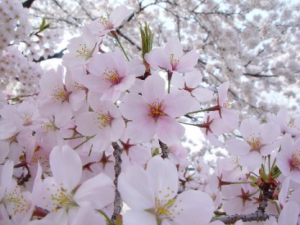
Infrorescence of a tree cultivated as ‘Somei-yoshino’ at the Koshikawa Botanical Gardens, University of Tokyo. I demonstrated that this individual has different genotype from true ‘Somei-yoshino’, the clonallity of the latter cultivar is verified by molecular markers.- Desired cooperation
-
- Collection and investigation of crops and cultivated plants
- Conservation and management of wild genetic resources
- Development and utilization of traditional and/or novel crops and cultivated plants
-
Faculty of Biosphere Geosphere Science, Department of Biosphere Geosphere Science
- Professor
- Keiji NAKAMURA
- Research Field
Biology
- Keyword(s)
Insect, Life history, Seasonal adaptations
- Research theme
-
- Experimental analysis of insect life-cycle adaptations
- Analysis of environmental factors affecting animal life cycles
- Studies of of environmental effects on amphibian growth and development
Outline of research activities
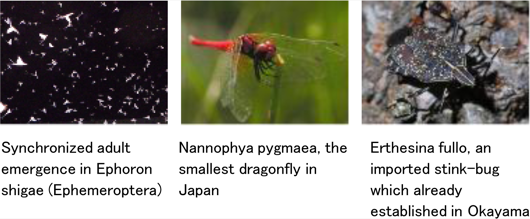
Insects adapt to various terrestrial environments. In temperate regions, to survive cold temperatures in winter is essential for insects. Thus, many insects predict the arrival of period which is not suitable for development and reproduction, and change their physiological state. I am studying how insects regulate the life cycles in response to environmental signals, by field observations and rearing experiments.
- Desired cooperation
-
- Preservation of ecosystems
- Experimental analysis of pest's life cycle
- Effects of environmental changes on animal ecology
-
Faculty of Biosphere Geosphere Science, Department of Biosphere Geosphere Science
- Professor
- Takeharu SATO
- Research Field
Disaster prevention meteorology
- Keyword(s)
Sediment disaster, Rainfall
- Research theme
-
- Development of landslide disaster prediction technology
- Development of risk evaluation technology of landslide disaster
Outline of research activities
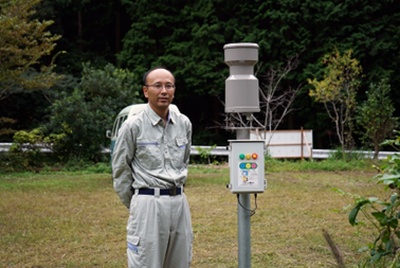
We have to evaluate the occurrence prediction and disaster occurrence risk of landslides from inspection data. We analyze the trend of the past of the disaster, to assess whether the “when” “where” landslide disaster occurs, we are working to hazard maps.
These results are considered useful in a safe life.
- Desired cooperation
-
- Construction consultant
- Disaster-prevention measures
-
Faculty of Biosphere Geosphere Science, Department of Biosphere Geosphere Science
- Professor
- Yousuke NOUMI
- Research Field
Geology,Geomorphology,Geoinformatics
- Keyword(s)
Granite,Rock Generation,Strata,Geomorphology,DEM,GIS
- Research theme
-
- Study on generation and emplacement of felsic magma such as granite
- Study on formation of strata and rocks distributed in Okayama Pref.
- Cultural geological study on various stone materials
Outline of research activities
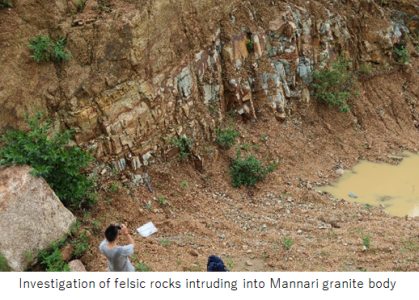
Our laboratory conducts petrological research on granites widely distributed in southwestern Japan, using fieldwork as the main means of study. In addition to granite, we also reserch to tuffs and basic igneous rocks. Informatics technics, such as GIS are used in study. In addition, granite weathering, landform formation, stone material utilization, etc. are being studied.
- Desired cooperation
-
- Investigation and research on geology and topography in Okayama Prefecture
- Research on the use of GIS with a focus on topographical analysis
- Cultural geological research on stone materials
-
Faculty of Biosphere Geosphere Science, Department of Biosphere Geosphere Science
- Associate professor
- Noriko KIDERA
- Research Field
Animal Ecology, Ethology, Conservation Ecology
- Keyword(s)
Wetland, Amphibians, Reptiles, Islands
- Research theme
-
- Ecology and ethology of amphibians and reptiles
- Evolutionary ecology of marine reptiles
- Assessment of anthropogenic impact on rice field ecosystems
Outline of research activities
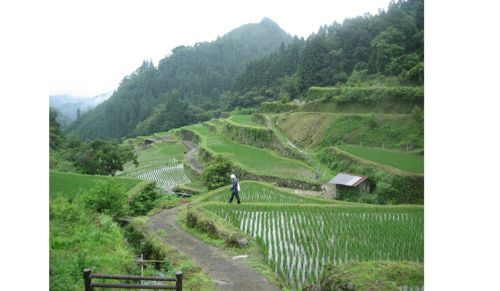
How can the population sustain in wetlands where the environment spatially and temporally fluctuates? We study the ecology of amphibians and reptiles in wetlands as target areas. Also, we study the anthropogenic impacts, such as paddy improvement and abandonment, on those populations from the viewpoint of conservation biology as well as ecology and evolution.
- Desired cooperation
-
- Molecular biology
- Long-term monitoring of wetland species
-
Faculty of Biosphere Geosphere Science, Department of Biosphere Geosphere Science
- Associate professor
- Shinji MIYAMOTO
- Research Field
Geography, Environmental Archaeology, Environmental History
- Keyword(s)
Disasters, Land Development History, Archaeological Site Location, Geomorphic Environmental Transition
- Research theme
-
- Elucidation of human responses to changes in the natural environment
- An Examination of the History of Land Development in the Asian Monsoon Region
- Analysis of Site Location Environment
- Comparative Study of Disaster Response in the Asian Monsoon Region
Outline of research activities
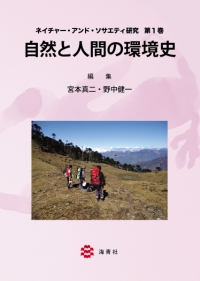
Based on fieldwork in flood zones from the Himalayan highlands above 4,000 meters to the zero-meter flood zones, we are trying to elucidate the actual disaster conditions and land development processes in each region. In contrasting between regions, we emphasize primary data and attempt to relativize the issues.
- Desired cooperation
-
- Disaster Prevention Mapping
- Support for disaster prevention activities, etc.
-
Faculty of Education, Department of Primary Education
- Associate professor
- Shogo HARADA
- Research Field
Home Economics Education
- Keyword(s)
Lesson development, Home life
- Research theme
-
- How to design home economics classes
- How “Home economics” should be as school subjects
- How “Home economics” has changed
Outline of research activities



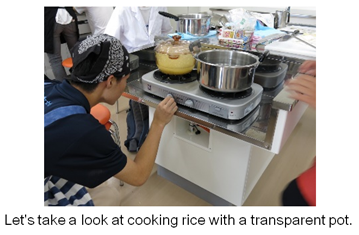
“Home economics” in school education aims to improve the skill of homemaking through the velationships between oneself and their family, their consumption habit, their eating habit, their dwelling life, their clothing life and so on.
“Home economics” is concerned with not only our claily life but some subjects life social studies and science. Moreover it’s very important to reflect on your home life so far.
I investigate how “Home economics” should be and I design exciting, satisfactory and practical classes.
- Desired cooperation
-
- Designing home economics classes
- Development of teaching materials
-
Faculty of Education, Department of Secondary Education
- Professor
- Yoko HASEBE
- Research Field
Educqtion, Socilology, Psyco-sociology
- Keyword(s)
Educqtion, Inter-linguistic & cultural communication, Social transformation, Agriculture and food culture,
- Research theme
-
- interlinguistic and intercultural communication based on the field of education, and its curriculum design and teaching methods
- Social transformation based on the field of education
- Sustainable collaboration model: among public sectors, private sectors, local communities, universities.
Outline of research activities


Specializes in education through teaching materials, methods, curriculum design, teachers’ training for inter-linguistic and intercultural communication based on social psychology. In 2007, started “Primary School Project” in Democratic Republic of Congo through intercultural collaboration, has continuously introduced how to create an atmosphere for “mutual collaboration” and “sustainable relationship” with the local community, and is always working with young researchers on the fieldwork-based approach in exploring how to interpret social and cultural phenomena in local communities to develop a model school for the area. We have other related projects in Kagoshima, Yamaguchi, Nagano, Kanagawa, Akita, Aomori.
As my specialty is interlinguistic and intercultural communication based on education, and I am researching its curriculum design and teaching methods. Generally, when we think about intercultural communication, it is exchange with foreign countries that comes to mind. However, even when we are talking with Japanese people, a word can often be interpreted completely differently by the other person, due to individual understandings of the image evoked by that particular word that arises from our diverse backgrounds. Nevertheless, there is the mistaken impression that sharing a language or an interpretation equals understanding, and major communication gaps can arise before we know it.
What is more, my special field of research is the creation of environments for interlinguistic and intercultural communication that generate these kinds of “discoveries.” What steps are required, what kind of settings do we need to create, and what kind of program do we need to assemble? This involves developing a curriculum design, creating an environment that generates sustainable shared understandings as quickly and naturally as possible, and coming up with the methodology to teach the required content and language, for example. We are undertaking this research by putting these concepts into practice through specific projects.- Desired cooperation
-
- Researches on collaboration of education x local community x city design x agriculture and food
- Researches on activating public educational system
- Researches on the process of collaboration between local community and university
-
Faculty of Management, Department of Management
- Professor
- Hideo MORIMOTO
- Research Field
Tourism Marketing and Tourism Studies
- Keyword(s)
Tourism-based urban development, destination-based tourism, regional management
- Research theme
-
- Research on regional revitalization through tourism in local cities facing simultaneous population decline and globalization.
- Diversifying Tourism and Tourism Marketing
Outline of research activities
1. Regional Revitalization and Community Development through Tourism
Japan is experiencing both population decline and aging, in addition to globalization. “Revitalizing local communities through the expansion of exchange and relationship populations” is becoming a key theme. One answer to this theme is “tourism,” and various promotional measures are being actively implemented throughout Japan. This research focuses on various methods, organizations, and regional initiatives as case studies to harness the power of tourism.
2. Diversifying Tourism and Tourism Marketing
Tourism is shifting from traditional sightseeing to an “authenticity-oriented” approach that emphasizes experiential value. This has led to a diversification of travel forms and customer needs, making it more complex. To address this diversification of tourism, we believe that tourism marketing requires understanding needs through data analysis and a marketing approach that considers both “Tokyo” and “outside Tokyo.” This research is progressing in this area.- Desired cooperation
-
- Community development projects related to local tourism
- Projects aimed at increasing the number of visitors and people with connections to the area.
-
Faculty of Management, Department of Management
- Professor
- Masashi KANDA
- Research Field
Marketing, Consumer Behavior, Business Strategy
- Keyword(s)
Marketing Research, Longitudinal Studies, Regional Design
- Research theme
-
- Causal Analysis of Policy and Promotion Effects Using Consumer Behavior Models
- Analysis of the Impact of Media and Information Exposure on Consumer Behavior
- Design of KPIs and KGIs and Development of Effectiveness Metrics for Evidence-Based Policy Making (EBPM)
Outline of research activities
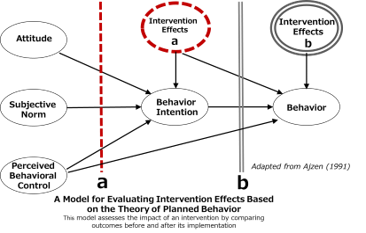
“Was that policy or promotion effective?” I answer this using data and theory — applying consumer behavior models (e.g., Theory of Planned Behavior) to longitudinal survey data before and after implementation to verify causality, not just correlation. I quantify how attitude change translates into actual behavior (purchases, participation, subscriptions, etc.) to pinpoint what drove results. Whether you’re a local government navigating KPI/KGI design or a company evaluating promotions, we bring proven experience across dining-out demand, disaster prevention, and food loss reduction campaigns.
- Desired cooperation
-
- Evaluation of promotional and policy effectiveness
- Development of marketing strategies based on consumer behavior
- Evidence-based policy making and regional branding
- Strategic utilization of existing data, etc.
-
Faculty of Management, Department of Management
- Professor
- Yuichi MORI
- Research Field
Computational Statistics
- Keyword(s)
Statistical computing, Data science, Multivariate methods, Social research
- Research theme
-
- Analysis for mixed measurement level data
- Variable selection in multivariate methods without external variables
- Acceleration of statistical computation and its application
Outline of research activities
Let me introduce the second topic of my research interests:
Consider a situation in which we wish to select items or variables so as to delete the redundant variables or to make a small dimensional rating scale to measure latent traits, variable selection in principal component analysis (PCA) is necessary to identify a subset of variables that represents all variables as much as possible.
In the figure below, the left-hand plot is a scatter plot of the 1st and 2nd principal components (PCs) obtained based on all 19 original variables, and the right-hand plot is based on seven selected variables. Little difference exists between the two configurations of PCs. This illustrates the meaningfulness of variable selection in PCA since selected variables can provide almost the same result as the original variables if the goal of the analysis is to observe the configuration of the PCs.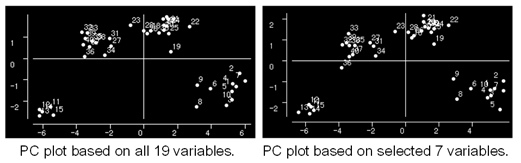
We can perform the variable selection in PCA as a prior analysis in big data analysis, and apply the proposed selection procedures to other multivariate methods such as factor analysis and correspondence analysis.In this topic, we also study on how to deal with categorical/qualitative data (for the first topic), and how to improve the computation effectively (for the third topic).- Desired cooperation
-
- Data analysis
- Social research
- Data science education
-
Faculty of Management, Department of Management
- Associate professor
- Risato Ando
- Research Field
Sport Social Psychology, Sport Management, Sport Policy, Sport Sociology
- Keyword(s)
Olympics and Paralympics, Sport Management, Sport Marketing, Sport Social Psychology, Sport Policy, Sport Values
- Research theme
-
- Social Value and Sustainability of Sport Events
- Social Psychological Research on Sport Participation, Spectatorship, and Volunteering
- Sport Policy and Sustainable Sport Organizations and High-Performance Systems
- Sport-Based Regional Revitalization and Sustainable Community Development
Outline of research activities
Sport has the potential to create diverse social values, including promoting health and well-being, revitalizing local communities, fostering diversity, encouraging international exchange, and raising awareness of environmental issues. My research examines how these values are perceived by individuals and how they influence behaviors such as sport participation, spectatorship, volunteering, and attachment to local communities.
Using social psychological research methods, including questionnaire surveys and statistical analyses, I scientifically investigate people’s perceptions of value and behavioral mechanisms in the context of mega-sport events such as the Olympic and Paralympic Games, professional sport, and community sport. I apply the findings to sport management, sport marketing, sport policy, and sport promotion, with the aim of contributing to a sustainable society in which more people can engage with sport and experience its valuet.
- Desired cooperation
-
- Social surveys, empirical research, and evaluation of social value through sport events
- Interdisciplinary collaborative research across management, tourism, health, education, environment, data science, and related fields
- Addressing regional challenges and promoting community revitalization in collaboration with local governments, businesses, and sport organizations
-
Faculty of Management, Department of Management
- Associate professor
- Ryohei TAKAHASHI
- Research Field
Rural Development, Social Innovation
- Keyword(s)
Rural management, Rural innovation, Destination Management/Marketing Organization(DMO)
- Research theme
-
- Sustainability of rural development through a destination management organisation.
- Building a rural development marketing database.
- Role of innovators in regional innovation
Outline of research activities
In response to the crisis of social, cultural, and economic sustainability in rural areas caused by declining birthrates and aging populations, the regional management movement, in which industry, academia, government, and the private sector collaborate to solve problems, has attracted attention.
In this laboratory, we support the construction of marketing databases for tourism marketing organizations that practice regional management, while analyzing the information obtained from these databases and examining effective regional management strategies.
There are two topics in this laboratory,
(1) Research on the relationships and roles among entities in effectively functioning regional management,
(2) Research on the construction of a marketing database that contributes to the formulation of regional management strategies and on evaluation indices for regional management.- Desired cooperation
-
- Developing a marketing database for strategic rural management planning
- Analysis of economic ripple effects of events, etc.
-
Faculty of Management, Department of Management
- Lecturer
- Kenta TSUKATSUNE
- Research Field
Social Statistics, Computational Social Science, Onomastics
- Keyword(s)
Name, Naming, Network, Prefecture, Regional Attractiveness
- Research theme
-
- Research on systems and influences of brand names, place names, and people's names
- Research on regional attractiveness
- Research on users of communication services and SNS
Outline of research activities
I collect various data on people’s behavior, attitudes, and psychological states, and conduct research to explore relationships among variables. I focus on social science research methods such as questionnaires and online experiments, but I also aim to conduct research in collaboration with adjacent fields such as humanities and engineering.In particular, I am interested in understanding mechanisms by which people in a position to evaluate and make choices, such as consumers and users of services, compare objects and make decisions. I am currently focusing on the following research topics. (1) Research on mechanisms by which consumers compare and select products and services bearing brand names or proper nouns such as names of places or people. (2) Research on mechanisms by which tourists, current residents, and prospective residents evaluate attractiveness of regions such as prefectures and municipalities. (3) Research on mechanisms by which users evaluate satisfaction with SNS, the Internet, and services using 5G technology.
- Desired cooperation
-
- Research on names of people and things
- Research on evaluation of regional attractiveness of prefectures and municipalities
- Social science research focusing on SNS users
-
Faculty of Management, Department of Management
- Lecturer
- Yasuo ISHIDA
- Research Field
Exercise Physiology, Environmental Physiology, Health Science
- Keyword(s)
Sports, Exercise, Wearable Device, Reaction Time, Environment
- Research theme
-
- Health promotion and lifelong sports
- Choice reaction time and performance
- Environmental temperature and physiological stress
Outline of research activities
[Health promotion and lifelong sports]
The important thing is to keep exercising. Sports are also important from the perspective of release stress and mental health. Wearable devices have made it possible to measure heart rate and walking distance during exercise. I promote research that contributes to health promotion and lifelong sports.
[Choice reaction time and performance]
The study of choice tasks leads to improved sports performance. The study of reaction time improved prevent accidents. I am studying reaction time and selection tasks.
[Environmental temperature and physiological stress]
Physiological stress during exercise in a hot or cold environment is evaluated using indices such as heart rate and body temperature. I am studying against heatstroke and prevention of hypothermia.- Desired cooperation
-
- Research on health promotion
- Research on environmental temperature and physiological stress
-
Faculty of Veterinary Medicine, Department of Veterinary Medicine
- Associate professor
- Fumiyo SAITO
- Research Field
Toxicology, Molecular biology, Risk analysis
- Keyword(s)
Hepatotoxicity, Gene expression analysis, Omics analysis, Molecular pathways
- Research theme
-
- Mechanism analysis of hepatotoxicity and nephrotoxicity
- Mechanism analysis of inter-organ coordination on energy metabolism
- Biomarker Search in Canine Frailty
Outline of research activities
Despite being primarily developed for industrial purposes and not intended for direct human consumption, many chemical substances still come into contact with the human body and organisms in the environment through various pathways, such as water, air, and other environmental factors. Ensuring a safe and secure society requires a thorough evaluation of the toxicity of pharmaceuticals and chemical substances.
In our laboratory, we conduct research on the toxicity of chemical substances through comprehensive gene expression analysis and obtain omics data to elucidate the molecular-level mechanisms, a field known as toxicogenomics. In addition to utilizing omics technology for understanding the inter-organ coordination of energy metabolism in vivo, our research also focuses on elucidating pathological processes in both humans and dogs.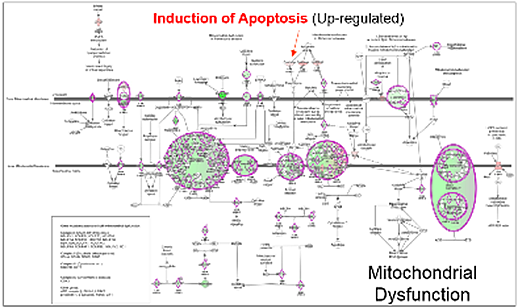
- Desired cooperation
-
- Data science (machine learning, data mining, etc.)
- Various disease models (genetically engineered animals, clinical samples, etc.)
-
Faculty of Veterinary Medicine, Department of Veterinary Medicine
- Lecturer
- Shin-ichi NAKAMURA
- Research Field
Veterinary Pathology, Toxicologic Pathology, Zoo and Wildlife Medicine, Veterinary Forensic Medicine
- Keyword(s)
Diagnostic Pathology, Experimental Pathology, Veterinary Forensic Medicine, Investigation of the cause of the death
- Research theme
-
- Pathological analysis of spontaneous diseases in various animals
- Pathological evaluation of studies using various animal models of disease
- Investigation of the cause of the death in animals
Outline of research activities
Veterinary pathology is the study of the causes of animal diseases and the study of their mechanisms. The results revealed by veterinary pathology are returned to clinical practice to help diagnose and treat animal diseases. Although our research targets all kinds of animals other than humans, we also contribute to the human medicine through basic research using laboratory animals.
I have experience in pathological diagnosis in a variety of animals, including companion animals, industrial animals, laboratory animals, wild animals, exotic animals, zoo and aquarium animals, fish, and invertebrates. I aim to identify issues from spontaneous diseases seen in various animals and to conduct research that can be fed back to clinical practice. At the same time, I will develop basic research using experimental pathological methods.- Desired cooperation
-
- Investigation of the cause of the death in animals
- Research on elucidating the mechanisms of various animal diseases.
- Studies on the isolation and identification of pathogens and the analysis of trace elements.
-
Organization for the Advancement of Higher Education, Natural Sciences Education Center
- Associate professor
- Hiroyuki AOKI
- Research Field
Dynamic property of Biomembrane, Morphology of self-assembly
- Keyword(s)
Phospholipid, Phase separation, Biomimetics
- Research theme
-
- Biomimetic microstructure formed by self-spreading behavior of phospholipid molecular assembly
Outline of research activities
We are concerned with biomimetic microstructure formed by self-spreading behavior of phospholipid molecular assembly in nanotechnology fields. Especially, a pollen like structure formed by egg-yolk phosphatidylcholine myelin figures has been studied by use of an optical microscopy. Budding of giant liposomes (GUV ~ 50µm) from the tip of spore like structure were observed. The size of GUV and the forming behavior were discussed using a geometric packing shape and a phase separation phenomenon of phospholipid molecules.

- Desired cooperation
-
- Pure research of hydrophilic surface processing of a micro-capsule using Drug Delivery System
-
Organization for the Advancement of Higher Education, Humanities and Social Sciences Education Center
- Associate professor
- Miho HAYASHI
- Research Field
Modern Japanese history, environmental education, archival studies
- Keyword(s)
Pollution museum, collaboration, ESD, public history, modern family
- Research theme
-
- Inheriting a difficult past
- Regeneration of polluted areas
- Pollution museum network
Outline of research activities
The difficult past was a catastrophic event that led to “mass death,” and the damage was felt not only by the dead but also by the survivors. This applies to wars, pollution damage, isolation policies for Hansen’s disease, pollution damage, etc. Furthermore, because such damage involves a complex relationship between perpetrators and victims, the “interpretation = meaning” of the event is likely to be divided depending on one’s position, making it difficult to pass on experiences. Based on the concepts of collaboration and ESD, I create spaces for dialogue, practice public history, and deepen my research on the inheritance of difficult past experiences.
- Desired cooperation
-
- Partnership for ESD and SDGs
- Passing down pollution experiences and tourism
Search by department
Search by SDGs