-
Faculty of Veterinary Medicine, Department of Veterinary Medicine
- Lecturer
- Takehito ONO
- Research Field
Drug Discovery, Locomotor Science, Osteoimmunology
- Keyword(s)
Drug Discovery, Muscle, Bone, Inflammation, Regeneration
- Research theme
-
- Development of novel therapeutic drugs for musculoskeletal disorders such as osteoporosis and sarcopenia
- Analysis of the functions of the immune system in the process of tissue regeneration
Outline of research activitiesIn Japan, average lifespan has grown significantly, but healthy lifespan has not. This indicates a substantial population of elderly individuals requiring long-term care. Musculoskeletal disorders (e.g. osteoporosis and sarcopenia) are prominent causes of needing care. In these conditions, decreased mobility leads to an increased risk of falls and fractures. Prolonged immobility during treatment exacerbates the decline in mobility. Extended periods of immobility often result in a high incidence of bedridden, which can trigger the onset of dementia. Therefore, addressing musculoskeletal disorders is crucial not only for reducing daily burdens but also for preventing the cascade progression to falls, fractures, bedridden status, and dementia.
While exercise is effective in maintaining musculoskeletal health, there are concerns about traumatic injury by engaging in training, potentially leading to further decline in mobility. Drug therapy holds promise as a treatment option, and tremendous efforts have been made for developing novel drugs; however, the creation of effective therapeutic drugs has yet to be achieved.
This study aims to explore compounds that activate cells composing bones and muscles, with the ultimate goal of creating innovative therapeutic drugs for musculoskeletal disorders.- Desired cooperation
-
- Synthesis of small compounds
- Bone metabolism
-
Faculty of Veterinary Medicine, Department of Veterinary Medicine
- Lecturer
- Timothy CURTIS
- Research Field
Foreign Language Education (English)
- Keyword(s)
English, Foreign Language, Education, Vocabulary, Grammar
- Research theme
-
- English vocabulary and grammar
- Extensive reading
- Content-based language acquisition
Outline of research activitiesI am interested in finding ways to make the acquisition of English and other foreign languages easier for Japanese learners. Therefore, my research focuses on acquisition of vocabulary and grammatical structures, and effective methods of education, including extensive reading and content-based instruction.
- Desired cooperation
-
- English vocabulary and grammar
- Extensive reading
- Content-based language acquisition
-
Faculty of Veterinary Medicine, Department of Veterinary Medicine
- Lecturer
- Yohei MOCHIZUKI
- Research Field
Cardiac Disease in Canine and Feline
- Keyword(s)
Cardiac Sinchronisity, pulmonary hypertension
- Research theme
-
- Left ventricular dyssynchrony in dog with various heart disease
- Prognostic factor in dog with pulmonary hypertension due to left heart disease
Outline of research activitiesThe cardiac synchronicity attracted attention because in human medicine prolongation of QRS duration is an independent prognostic factor of heart failure patients. It is believed that this is due to delayed electrical excitement of the ventricle, resulting in inefficient myocardial movement, which is supported by the benefical effect of cardiac resynchronization therapy. However, as a problem of cardiac resynchronization therapy, it is mentioned that there are many cases called non-responders. One of the methods for detecting this non-responder is mechanical dyssynchrony assessed by echocardiography. Dogs have electrical conduction systems similar to humans, and are often used as dyssynchronous model animals. I suspect that mechanical dyssynchrony assessed by echocardiography in dogs may be a factor that worsens the prognosis of heart disease? We are conducting research using clinical cases and model animals.
- Desired cooperation
-
- Pathophysiological analysis of cardiac disease in small animals
- Resarches using canine model of various cardiac disease
-
Faculty of Veterinary Medicine, Department of Veterinary Medicine
- Lecturer
- Yoichi INOUE
- Research Field
Theriogenlogy,Animal hygiene
- Keyword(s)
Ruminant, Local breed,Livestock management
- Research theme
-
- Reproductilve disorders, Peripartum diseases, mastitis in Ruminants
- Inflection of Japanese local orse
Outline of research activitiesReproductive success is an important factor directly related to management of domestic animal farms, and its improvement needs multi-approach from various directions, such as reproductive technique, hygiene management, feed,etc. From now, I would like to make studies aimed to solve the reproductive problems in the field, not only with cow ,but with small ruminants(goat, sheep, deer)and Japanese local horse.
- Desired cooperation
-
- Collaborated studies with regional organizations of animal husbandry and farms
-
Faculty of Veterinary Medicine, Department of Veterinary Medicine
- Lecturer
- Yoshinori TANAKA
- Research Field
Cell Biology, Molecuar Biology, Experimental Pathology
- Keyword(s)
Protein Transport, Protein Degradation, Neurodegenerative Diseases
- Research theme
-
- Cellular function regulated by cellular degradation system
- Dysregulation of vesicular transport on neurodegenerative diseases
- Brain propagation of causal proteins for dementia
- Identification of molecules to cure or modify neurodegenerative diseases
Outline of research activities

Liife expectancy is getting longer in developed countries, which result in progressive increase in the number of elderly individuals. In parallel, the number of patients with neurodegenerative diseases that cannot yet be cured or significantly slowed, such as frontotemporal dementia (FTD) and amyotrophic lateral sclerosis (ALS), is increasing. The cytoplasmic aggregation and accumulation of the nuclear protein TAR DNA-binding protein 43 kDa (TDP-43) is a hallmark of FTD and ALS. TDP-43 action in the nucleus is essential for cellular homeostasis, and TDP-43 aggregation in the cytoplasm is toxic to cells. These findings indicate that TDP-43 accumulation in the cytoplasm mediates development of FTD and ALS. Notably, TDP-43 pathology in the affected region spread over brain and spinal cord simlar to prion diseases. However, the mechanism for cell-to-cell spreading of TDP-43 pathology has been unknown. We previously showed that macroautophagy, a cellular degradation system, suppress aggregate-prone TDP-43 accumulation. Thus, we examine whether dysregulation of macroautophagy develops TDP-43 pathology. For cure of neurodegenerative diseases such as FTD and ALS through suppression of TDP-43 pathology, we are working on fundamental reserach.
- Desired cooperation
-
- Drug discovery
- Clinical study
- metabolic study
-
Faculty of Veterinary Medicine, Department of Veterinary Medicine
- Lecturer
- Yu OKUDA
- Research Field
Comparative anatomy, Morphology, Primatology, Mammalogy
- Keyword(s)
Anatomy, Mammalogy, Primatology, Postcranium
- Research theme
-
- Comparative morphology of the calcaneus and astragalus in Papionini
- Anatomical Studies of the the aortic arches in Dolphins
- Genetic characterization of native horse in Asia
Outline of research activitiesIn general, tooth morphology has been used to identify mammalian fossils. Some groups of primates have very similar tooth morphology, and other external morphologies are also hard to use for identification. To overcome this issue, we are attempting to use the morphology of the calcaneus and astragalus, which have been used to classify higher taxa traditionally, to identify primates and their fossils.
We are also conducting the comparative anatomy of various animals, such as whether the unique blood vessels of specialized mammals, e.g.) cetaceans, are homologous which arteries of other mammals.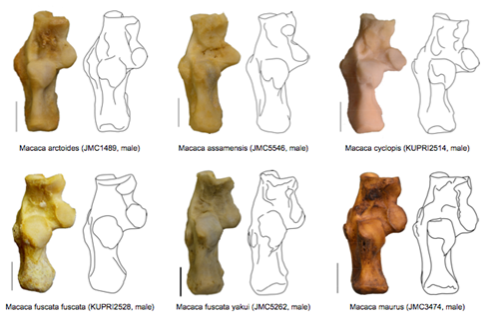
- Desired cooperation
-
- Vertebrate paleontological researches
-
Faculty of Veterinary Medicine, Department of Veterinary Medicine
- Assistant professor
- Daiki OKADA
- Research Field
Veterinary Ophthalmology
- Keyword(s)
Uvea, Inflammation, Signal transduction
- Research theme
-
- Anti-inflammatory mechanisms in intraocular inflammation
Outline of research activities
Vision is an essential sensory function for both humans and animals, playing a crucial role in daily life and closely related to quality of life. Uveitis is a disease characterized by inflammation of the uveal tract within the eye. Progression of this condition can result in visual impairment or blindness. In canines, uveitis is recognized as a significant cause of vision loss, emphasizing the importance of early detection and appropriate treatment.
My research primarily focuses on elucidating the molecular mechanisms underlying the onset of uveitis, with the aim of identifying and evaluating novel therapeutic candidates. The anti-inflammatory properties of diverse chemical compounds are evaluated using research models meticulously designed with future clinical applications in mind.
The objective these studies are threefold: to establish new therapeutic strategies for uveitis; to protect visual function; and to contribute to the improvement of patients’ wuqlity of life.- Desired cooperation
-
- Research on the discovery and pharmacological evaluation of novel anti-inflammatory therapies for uveitis.
- Elucidaton of glaucoma pathgenesis and development of therapeutic strategies.
-
Faculty of Veterinary Medicine, Department of Veterinary Medicine
- Assistant professor
- Isshu KOJIMA
- Research Field
Virology, Microbiology, Infection control
- Keyword(s)
Rhabdovirus, Bunyavirus, Programmed cell death, Stress granule
- Research theme
-
- Mechanism of viral pathogenesis
- Elucidation of anti-viral mechanisms
- Investigation of emerging infectious diseases
Outline of research activities


To protect from viruses, animals including humans have acquired various innate immunity. However, viruses have also gotten the abilities to evade the host immune responses in order to efficiently propagate.
In the relation between viruses and host immune responses, I focus on the “programmed cell death”, which is the cell suicide to inhibit the infection to other cells, and “stress granule”, which is recently identified as the new host immune response. In the future, I’d like to investigate emerging infectious disease viruses to elucidate the viral survival-strategy against the host.- Desired cooperation
-
- New mechanism of viral pathogenesis
- Innovative detection using the host immune responses
- Epidemiology of emerging infectious viruses
-
Institute for the Advancement of Higher Education , Department of Veterinary Medicine
- Assistant professor
- Mami ARAKI
- Research Field
Oncology, Histology, Reproductive Immunology, Molecular biology
- Keyword(s)
Breast tumors, tumor cell differentiation, Pregnancy Immune Tolerance
- Research theme
-
- Tumor cell differentiation in mammary tumors
- Immune tolerance during pregnancy
Outline of research activitiesBreast tumor cells have various differentiation states, and it has been reported that clinical malignancy and prognosis vary depending on the differentiation stage. Therefore, it is very important to know the differentiation status of mammary tumors, but the mechanisms of tumor differentiation are still largely unknown. This research focuses on the function of type Ⅵ collagen in mammary tumor cell differentiation, mainly using canine mammary tumors. Many canine mammary gland tumors have luminal epithelial progenitor cell characteristics, and it is considered important to understand the differentiation mechanism of this characteristic. I am currently conducting histological and molecular biological research on the differentiation mechanism of breast tumors and related tissue morphology, focusing on various differentiation factors.

- Desired cooperation
-
- Providing breast tumor and normal tissue samples
- Researches on differentiation
- Researches on miRNA
- Researches on immunology
-
Faculty of Veterinary Medicine, Department of Veterinary Medicine
- Assistant professor
- Naomi OHTA
- Research Field
Veterinary Epidemiology, Microbiology
- Keyword(s)
Antimicrobial resistance, Foodborne pathogen, Salmonella, Whole-genome sequencing, microbiome
- Research theme
-
- Antimicrobial resistant bacteria
- Microbiome
- Sequencing and Data visualization
Outline of research activitiesMy research goal is to identify the impact of antimicrobial use in animals (farm animals & small animals) to the human population using various epidemiological methods, ranging from quantitative to molecular techniques. With the development of the sequencing technology, we will look into the whole-genome of the bacteria and microbiome derived from diverse animals and the environment. My other research interests are in developing epidemiologic data visualization and bacterial evolution analysis.
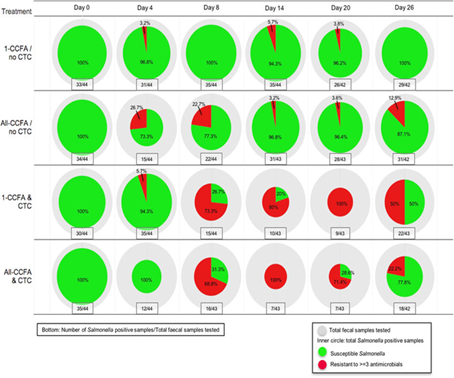 Image: Showing the prevalence of antibiotic resistant Salmonella in cattle after the treatment with ceftiofur and chlortetracycline
- Desired cooperation
-
- Analysis of big data
- Sampling from different animals and environment
-
Faculty of Veterinary Medicine, Department of Veterinary Medicine
- Assistant professor
- Osamu SAKAI
- Research Field
Veterinary Internal Medicine, Tumor Biology
- Keyword(s)
Tumor, Immunotherapy, Dog, Cat
- Research theme
-
- Molecular biology of canine tumor
- Exploration of novel therapeutic strategies in veterinary oncology
Outline of research activities
In veterinary clinical practice, neoplastic diseases are important which is one of the leading causes of death. Furthermore, it is known that spontaneous tumors in companion animals which share a living environment with humans exhibit many characteristics in common with human tumors, and research on small animal tumor has the possibility to contribute to the medical field. However, biological characteristics of small animal tumor are largely unknown, and biological analyses to clarify the metabolic changes and gene and protein expression characteristic of tumors, as well as research for novel treatments, are under way. My research aims to analyze the biological characteristics of small animal tumors and explore novel therapeutic strategies such as immunotherapy.
- Desired cooperation
-
- Cancer research
-
Faculty of Veterinary Medicine, Department of Veterinary Medicine
- Assistant professor
- Ryohei YOSHITAKE
- Research Field
Veterinary Oncology, Bioinformatics, Veterinary Diagnostic Radiology
- Keyword(s)
Solid tumor, Single-cell RNA-sequencing, Exome analysis
- Research theme
-
- Mechanisms of progression in canine mammary gland tumors
- Comprehensive genetic analysis of tumors in companion animals
- Development of computer-aided diagnosis model using deep learning
Outline of research activities
Tumors in companion animals (e.g., dogs and cats) have been increased with the advances in veterinary medicine, reaching to the top cause of death. To overcome it, we need to understand their pathology, i.e., why they occur and how they progress. Currently, I am studying the mechanisms of tumor progression in various companion animal cancers, mainly focusing on canine mammary gland tumors or urothelial cancers, with molecular biological methods as well as state-of-art technology like comprehensive genetic analysis (e.g., microarray, RNA-seq, exome analysis, whole genome analysis), single-cell RNA-seq, or spatial transcriptomics. Also, I am working on the development of deep-learning-based artifical intelligence models with my expertise on bioinformatics to help diagnostic radiology.
- Desired cooperation
-
- Researches on tumors in companion animals
- Bioinformatics using Linux or R/python languages
-
Faculty of Veterinary Medicine, Department of Veterinary Medicine
- Assistant professor
- Shuhei KAJIKAWA
- Research Field
Bone biology
- Keyword(s)
Osteoclast
- Research theme
-
- Elucidation of regulatory mechanisms of osteoclast migration.
- Identification of biomarkers in osteoporosis.
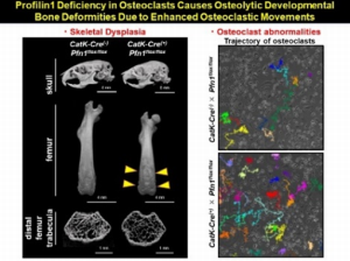
Outline of research activitiesThe bone is essential for structural support of the body and protection of internal organs, and also provides mineral storage for metabolic homeostasis. Bone mass is regulated in a fine-tuned balance between bone formation and resorption, and breakdown of this balance leads to bone disorders characterized by alterd bone mass, such as osteoporosis and osteopetrosis. It has been established that osteoblasts and osteoclasts play critical roles in bone formation and resorption, respectively, and indeed dysfunction of these cells is involved in pathogenesis of alterd bone mass. I have been working on osteoclast. Recently, we reported steoclats specific actin-binding protein Profilin1 knockout (Pfn1-cKO) mice have skeletal dysplasia associated with osteopenia and Pfn1-cKO osteoclasts exhibit increased migration, indicating that Pfn1 protects mice from osteopenia and skeletal deformities by negatively regulating osteoclast migration (Kajikawa S. et al., JBMR PLUS (2018)). Now, I am working on regulatory mechanisms of osteoclast migration by Pfn1.
- Desired cooperation
-
- Tracking of cells in mice or human.
- Development of therapy for osteopenia and skeletal deformities.
-
Faculty of Veterinary Medicine, Department of Veterinary Medicine
- Assistant professor
- Takeshi HOMMA
- Research Field
Veterinary anatomy, Comparative anatomy
- Keyword(s)
Inner ear, Vertebrates, Neurotrophic factor
- Research theme
-
- Comparative anatomical study of Vertebrate's inner ear
- Histochemical study of mammal's auditory organ
Outline of research activities

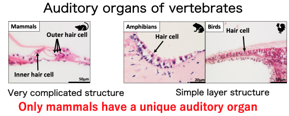
In mammals, auditory organ is composed of two types of hair cells, inner and outer hair cells, and various supporting cells. In contrast to the clear anatomical diversity of hair cells and supporting cells in mammals, the auditory organs of non-mammals show a simple structure in which hair cells and supporting cells are arranged in a row. I’m studying the evolution of the mammalian auditory system from a comparative anatomical perspective. In addition, I’m studying the molecules that are expressed characteristically in various types of supporting cells in order to elucidate the roles of each type of supporting cell in mammals.
- Desired cooperation
-
- In situ hybridization
- Study of the auditory system of vertebrates
-
Faculty of Veterinary Medicine, Department of Veterinary Medicine
- Assistant professor
- Takuya KANDA
- Research Field
Food safety and Food Microbiology, Bacteriology, Animal Health
- Keyword(s)
Mycoplasma bovis, adhesion, Loop-mediated isothermal amplification, HACCP
- Research theme
-
- The factor of Mycoplasma bovis adhesion in infection
- The rapid detection of bacteria
- Assessment of microbial contamination risk in meat products
Outline of research activities

Food hygiene is expected to more important due to HACCP and export of meat and marine product.
Pneumonia is a common disease in feedlot, and Mycoplasma bovis may be involved. The bacteria occur such as pneumonia, mastitis, and arthritis. Endocarditis, which causes lesions in the heart, is occasionally observed at slaughterhouses (Fig). The researches of adhesive factors for vaccine development leads to a stable supply of meat product.
Enterohemorrhagic Escherichia coli (EHEC, STEC), Salmonella, Campylobacter,which are known to be food poisoning, are tested at the Meat Inspection Center. The study of food microbiology that have attracted attention in recent years, such as Clostridium perfringens and Listeria monocytogenes, makes to improve food safety.

- Desired cooperation
-
- Resareches on adhesion of Bacteria to host cell
- The rapid detection of bacteria using LAMP and PCR etc...
-
Faculty of Veterinary Medicine, Department of Veterinary Medicine
- Assistant professor
- Tomoko KODAMA
- Research Field
Pharmacology, Vascular biology
- Keyword(s)
Hypertension, Diabetes
- Research theme
-
- Exploring outbreak and molecular mechanisums of hypertension
- Exploring outbreak and molecular mechanisums of diabetss
Outline of research activitiesThe number of patients with type 2 diabetes is projected to increase from about 400 million to about 600 million by 2040, and hypertension affects about 1.4 billion people worldwide. It has also been reported that about 85% of type 2 diabetes patients develop hypertension by the age of 50, and about 50% of hypertensive patients develop type 2 diabetes, so there are many patients with both hypertension and diabetes. Functional abnormalities and structural changes in large blood vessels such as the aorta, small blood vessels such as capillaries, and lymphatic vessels are associated with the pathogenesis of hypertension and diabetes. Using genetically engineered animals, excised blood vessels and lymphatic vessels, and cultured cells, I am investigating the pathogenesis of hypertension and diabetes using molecular biological techniques, with the aim of developing new therapeutic agents.
- Desired cooperation
-
- Research on the development of new therapeutic agents
- Research on hypertension
- Research on diabetes mellitus
-
Faculty of Veterinary Medicine, Department of Veterinary Medicine
- Assistant
- Yukari NAKAMURA
- Research Field
Dermatology, Parasitology, Epidemiology
- Keyword(s)
Dermatosis, Parasite, Preventive Veterinary Medicine
- Research theme
-
- Research on dermatosis and ear diseases in animals
- Treatment of parasite infections in animals
- Epidemiological research on preventive veterinary medicine
Outline of research activities

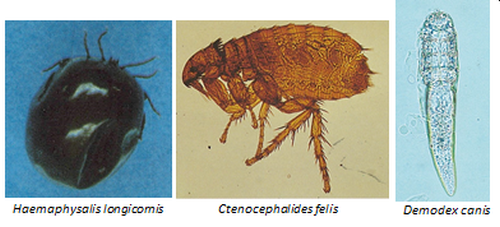
I am working for research on the causes, diagnosis and treatment of dermatosis and ear diseases in companion animals (dogs, cats and exotic pet animals). Furthermore, I am focusing on research on the treatment of infestation by fleas, ticks and Demodex mites. With regard to preventive veterinary medicine, the survey on the prevalence of infectious diseases in dogs and cats and further pharmacoepidemiological studies on vaccines, prophylactics for dirofilariasis, and ectoparasiticides for dogs and cats.
- Desired cooperation
-
- Research on drugs for cutaneous application for companion animals
- Research on parasite infections in animals
- Research on veterinary medical products
-
Faculty of Veterinary Medicine, Department of Veterinary Medicine
- Assistant
- Yuko MIZUTANI
- Research Field
Veterinary Radiology, Veterinary Diagnostic Imaging, Veterinary Neurology
- Keyword(s)
Radiation Therapy, MRI, Diffusion Tensor Imaging (DTI)
- Research theme
-
- Precision Enhancement and Indication Expansion in Veterinary Radiation Therapy
- Clinical Application of DTI in Veterinary Medicine
- Imaging-Based Evaluation and Prediction of Radiation Effects
Outline of research activities
In recent years, advances in high-precision radiotherapy and image-guided technologies have improved the balance between tumor control and normal tissue preservation in veterinary medicine. However, compared with human medicine, the number of clinical cases remains limited due to constraints such as general anesthesia and cost. In addition, differences in long-term follow-up further constrain data availability. Consequently, evidence regarding the evaluation and prediction of radiation effects, particularly late adverse effects, remains insufficient.
In human medicine, image analysis with magnetic resonance imaging (MRI), radiomics, and genomic information is used to assess therapeutic efficacy and the risk of radiation effects, and to inform treatment planning, thereby contributing to the ongoing development of personalized radiation therapy. In contrast, veterinary medicine still relies primarily on evaluations based on radiation dose and clinical outcomes, and quantitative imaging-based assessments as well as integrative multi-factor analyses remain underdeveloped.
Against this background, we have conducted research on diffusion tensor imaging (DTI) using MRI and are exploring its clinical applications for optimizing treatment planning and evaluating and predicting radiation effects.- Desired cooperation
-
- Research on Veterinary Radiation Therapy
- Research on Image Analysis
-
Faculty of Veterinary Medicine, Department of Veterinary Associated Science
- Professor
- Kayo FURUMOTO
- Research Field
Laboratory Animal Science, Health Science
- Keyword(s)
Animal Welfare, Health Promotion
- Research theme
-
- Animal welfare in laboratory animal science
- Health promotion of owner and dog
Outline of research activities

In order to conduct animal experiments with due consideration for animal welfare, we are improving to improve experimental techniques and management methods for experimental animals, and the breeding environment. Since we humans and animals can only communicate non-verbally, we are interested in assessing the needs of animals. We are studying pain assessment and temperature management in postoperative mice by setting up an environment that is selective for the animals.
We also view dog walking as a “joint activity between owner and dog,” and research the health promotion of dogs and their owners through dog walking. Dog walking have been reported to have a positive effects on the physical and mental health of dogs and their owners. We are currently researching heat stroke prevention for dog owners and dogs during dog walking from the perspective of safe health promotion.- Desired cooperation
-
- Animal Welfare
- Animal Nursing
- Health Promotion
-
Faculty of Veterinary Medicine, Department of Veterinary Associated Science
- Professor
- Nobuyuki KIMURA
- Research Field
Experimental pathology, Cell Biology, Zoobiquity
- Keyword(s)
Aging, Brain, Nonhuman Primate, Membrane Traffic
- Research theme
-
- Pathogenesis of Alzheimer's disease
- Aging science
- Membrane traffic and neuronal activity
- Biological adaptation for climate changes
Outline of research activities

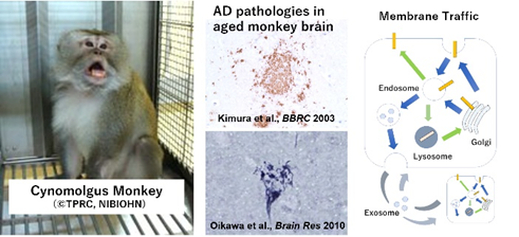
Alzheimer’s disease (AD) is one of the major causative diseases for dementia. Characteristic AD pathology, such as amyloid plaques and neurofibrillary tangles, are observed in aged animal brains, suggesting that AD pathology would be the sign of brain aging. Zoobiquity is an approach to investigate and treat diseases without any distinction of species. I have been working on the studies to clarify the mechanism of brain aging and the pathogenesis of AD by using nonhuman primates. I am also interested in how neuronal activities affect membrane traffic system in neural cells.
- Desired cooperation
-
- Clinical research on age-related diseases.
- Basic research on aging
- Basic research on membrane trafficking
Search by department
Search by SDGs