-
Faculty of Veterinary Medicine, Department of Veterinary Medicine
- Lecturer
- Kei HAYASHI
- Research Field
Parasitology, Veterinary Parasitology, Phylogeny
- Keyword(s)
Parasite, Trematode, Cestode, Nematode, Helminth
- Research theme
-
- Relationship between the parasite evolution and their host.
- Parasite dynamics, pathogenesis and morphological and molecular characters.
- More usuful diagnosis and identification methods for parasites.
Outline of research activities





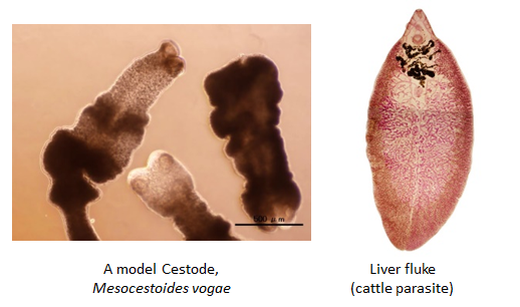
I analyze influences of biogeographic phenomena such as evolution and migration of host animals on parasite distribution or population using molecular phylogenetic analyses. I’m also conducting research on the mechanisms of migration and pathology of helminths in their host.
- Desired cooperation
-
- Experimental biological research of parasitic helminths.
- Biogeographic study of host livestocks and wild animals.
-
Faculty of Veterinary Medicine, Department of Veterinary Medicine
- Lecturer
- Kohei MURAKAMI
- Research Field
Immunology, Bone metabolism,
- Keyword(s)
Polyarthritis, WNT signaling
- Research theme
-
- Pathogenesis of canine idiopathic immune-mediated polyarthritis
- Roles of WNT signaling on bone metabolisms
Outline of research activities
Rheumatoid arthritis (RA) is a disease based on chronic inflammation in synovium. Since RA is a relatively common disease in human, there are many studies on its pathogenesis, and recently we can control RA with biological drugs or small molecular compounds. Dogs may develop a disease similar to that of human, also known as canine rheumatoid arthritis (cRA). However, since there are few studies on its pathophysiology, most dogs with cRA take only symptomatic treatment, and joint structures are irrevocably destroyed. I am studying to elucidate the inducer of inflammation in cRA, identification of early diagnostic marker, and development of new therapeutic drug.
I am also studying the Wnt5a antagonist Sfrp5. Sfrp5 is an adipokine that regulates the metabolism of adipocytes. We already found that Sfrp5 regulates not only adipocytes but also osteoblasts and osteoclasts. In other words, fat tissue may control bone. I am studying the mechanisms how Sfrp5 regulates bone.- Desired cooperation
-
- Study of rheumatoid arthritis
- Development of new drugs
-
Faculty of Veterinary Medicine, Department of Veterinary Medicine
- Lecturer
- Kosuke TAKEYA
- Research Field
Biochemistry, Physiology
- Keyword(s)
Smooth Muscle, Cell Signaling
- Research theme
-
- Regulatory mechanisms of smooth muscle contraction and relaxation
- Regulatory mechanisms of renal microcirculation
- Development of highly sensitive phosphorylation analysis
Outline of research activities
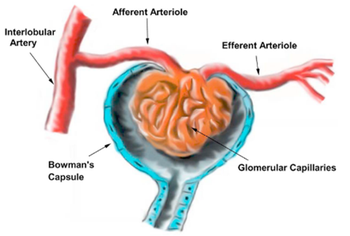
Smooth muscle composes a muscular layer in various organs, such as blood vessels, gastrointestinal tracts, bladder, uterus, etc. in the vertablate body. It plays important roles in many life stages from birth to death. To achieve different roles in different locations, each smooth muscle has unique regulatory mechanisms of contraction and relaxation. For example, renal arteriolar smooth muscle, which regulates blood flow in the kidney, contracts in response to a vasoconstrictor, angiotensin II by activating molecular motor in the cells. On the other hand, another vasoconstrictor, endothelin 1, induces abnormal contraction in the arteriole by excessively activating the motor. I hve been studying the molecular mechanisms of smooth muscle contractions, especilly in the renal arterioles.
- Desired cooperation
-
-
Faculty of Veterinary Medicine, Department of Veterinary Medicine
- Lecturer
- Shin-ichi NAKAMURA
- Research Field
Veterinary Pathology, Toxicologic Pathology, Zoo and Wildlife Medicine, Veterinary Forensic Medicine
- Keyword(s)
Diagnostic Pathology, Experimental Pathology, Veterinary Forensic Medicine, Investigation of the cause of the death
- Research theme
-
- Pathological analysis of spontaneous diseases in various animals
- Pathological evaluation of studies using various animal models of disease
- Investigation of the cause of the death in animals
Outline of research activities



Veterinary pathology is the study of the causes of animal diseases and the study of their mechanisms. The results revealed by veterinary pathology are returned to clinical practice to help diagnose and treat animal diseases. Although our research targets all kinds of animals other than humans, we also contribute to the human medicine through basic research using laboratory animals.
I have experience in pathological diagnosis in a variety of animals, including companion animals, industrial animals, laboratory animals, wild animals, exotic animals, zoo and aquarium animals, fish, and invertebrates. I aim to identify issues from spontaneous diseases seen in various animals and to conduct research that can be fed back to clinical practice. At the same time, I will develop basic research using experimental pathological methods.- Desired cooperation
-
- Investigation of the cause of the death in animals
- Research on elucidating the mechanisms of various animal diseases.
- Studies on the isolation and identification of pathogens and the analysis of trace elements.
-
Faculty of Veterinary Medicine, Department of Veterinary Medicine
- Lecturer
- Shinya MIZUTANI
- Research Field
Clinical Veterinary Medicine, Veterinary Suegery, Veterinary Diagnostic Imaging, Veterinary anesthesiology
- Keyword(s)
soft tissue surgery, anesthesia, diagnostic imaging
- Research theme
-
- Pathophysiology of canine gallbladder disease
- Reserch of liver diseases in canine and feline
- Surgical anatomy of small animals using diagnostic imaging equipment, etc.
Outline of research activities



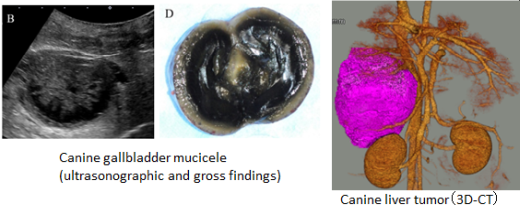
Typical gallbladder diseases in dogs include biliary sludge, gallbladder mucocele, and cholelithiasis, but the pathophysiology remains unclear. I am investigating safer treatment methods by clarifying the detailed pathophysiology of canine gallbladder disease.
In addition, the progress of diagnostic imaging technology in veterinary medicine is remarkable, and I am also working on the application of these data to surgical anatomy (vascular anatomy, etc.), and using these, considering a more safer surgical methods.
- Desired cooperation
-
- Clinical veterinary research in small animals
- Reserch of hepatobiliary diseases in small animals
- Reserch of surgical anatomy in small animals
-
Faculty of Veterinary Medicine, Department of Veterinary Medicine
- Lecturer
- Sho KADEKARU
- Research Field
Veterinary pathology
- Keyword(s)
Diagnostic pathology, Exotic animal, Meat inspection
- Research theme
-
- Pathological study of cardiac dilation in meerkat
- Pathological study of disease in various animal species
- Pathological study of dermal fungus disease in Shiro-hebi (Albino of Japanese rat snake)
Outline of research activities
Veterinary pathology is the study and elucidation of the causes of animal disease and the study of their mechanisms. There are varies of animal diseases that are recognized dependinng on the animal species, the porpose of keeping animals and anatomical and physiological charaters of animal specises.
The researchs currently focusing on:
1) Pathological study of cardiac dilation in meerkat aims to elucidate the cause of cardiac dilation with suspecting a relationship with nutrients deficiency such as vitamin E and selenium.
2) Patholocical study of dermal fungus disease in Shiro-hebi (albino of Japanese rat snake) aims to elucidate the cause of the disease.- Desired cooperation
-
- Physical and chemical science
- Microbiology
- Ecology
-
Faculty of Veterinary Medicine, Department of Veterinary Medicine
- Lecturer
- Shuichi CHIBA
- Research Field
Neuroendocrinology, Psychopharmacology
- Keyword(s)
Stress (psychological), Neuroprotection, Sex steroids, Animal model of psychiatric diseases
- Research theme
-
- Pathophysiology of the depression caused by chronic stress exposure
- Neuroprotective effect of sex steroid hormones
Outline of research activities
Chronic exposure to psychological stress leads to increased levels of hormones and cytokines, including glucocorticoids, in the blood or brain tissue. These substances may be involved in the pathogenesis of psychiatric disorders such as depression. To study the chronic effects of glucocorticoids on the nervous system, we are creating animal models of depression to identify useful targets for the treatment of depression. Steroid hormones are also known to protect nerve cells (neuroprotection) and I am investigating how this action is altered in the pathogenesis of depression and whether it can be used to develop treatments.
- Desired cooperation
-
- Research about neuroendocrinological diseases
- Development of animal models of psychiatric disease and exploratory research using the models
- Research about neuroprotective effect of sex steroid hormone
-
Faculty of Veterinary Medicine, Department of Veterinary Medicine
- Lecturer
- Takamasa ITOI
- Research Field
Neurology, Rregenerative Medeicine
- Keyword(s)
Spinal Cord Injury, Spinal Cord Regeneration, Rehabilitation, Ggait Aanalysis
- Research theme
-
- Developing new treatment for Spinal Cord Injury
- Study of Spinal Cord Injury Markers
- Dog gait analysis
Outline of research activities
Regenerative medicine is attracting as much attention in the veterinary medicine field as in the human medicine field. Research in the veterinary medicine is also expected to be returned to the human medicine. Severe spinal cord injuries in small animal clinical practice often result in animals that cannot walk or stand on their own even after treatment, and there is a need to develop new treatment for spinal cord injuries. In this laboratory, we are conducting research on the development of spinal cord regeneration therapies using stem cells that can be isolated from living tissue and various cytokines. We are also researching the effectiveness and efficacy of rehabilitation as well as the development of new treatment methods by further elucidating the pathophysiology of spinal cord injury and studying gait analysis of spinal cord injured animals.
- Desired cooperation
-
- Stem cells
- Treatment of spinal and spinal cord diseases
- Molecular biology
- Biomechanics
-
Faculty of Veterinary Medicine, Department of Veterinary Medicine
- Lecturer
- Yoshinori TANAKA
- Research Field
Cell Biology, Molecuar Biology, Experimental Pathology
- Keyword(s)
Protein Transport, Protein Degradation, Neurodegenerative Diseases
- Research theme
-
- Cellular function regulated by cellular degradation system
- Dysregulation of vesicular transport on neurodegenerative diseases
- Brain propagation of causal proteins for dementia
- Identification of molecules to cure or modify neurodegenerative diseases
Outline of research activities
Liife expectancy is getting longer in developed countries, which result in progressive increase in the number of elderly individuals. In parallel, the number of patients with neurodegenerative diseases that cannot yet be cured or significantly slowed, such as frontotemporal dementia (FTD) and amyotrophic lateral sclerosis (ALS), is increasing. The cytoplasmic aggregation and accumulation of the nuclear protein TAR DNA-binding protein 43 kDa (TDP-43) is a hallmark of FTD and ALS. TDP-43 action in the nucleus is essential for cellular homeostasis, and TDP-43 aggregation in the cytoplasm is toxic to cells. These findings indicate that TDP-43 accumulation in the cytoplasm mediates development of FTD and ALS. Notably, TDP-43 pathology in the affected region spread over brain and spinal cord simlar to prion diseases. However, the mechanism for cell-to-cell spreading of TDP-43 pathology has been unknown. We previously showed that macroautophagy, a cellular degradation system, suppress aggregate-prone TDP-43 accumulation. Thus, we examine whether dysregulation of macroautophagy develops TDP-43 pathology. For cure of neurodegenerative diseases such as FTD and ALS through suppression of TDP-43 pathology, we are working on fundamental reserach.
- Desired cooperation
-
- Drug discovery
- Clinical study
- metabolic study
-
Faculty of Veterinary Medicine, Department of Veterinary Medicine
- Assistant professor
- Daiki OKADA
- Research Field
Veterinary Ophthalmology
- Keyword(s)
Uvea, Inflammation, Signal transduction
- Research theme
-
- Anti-inflammatory mechanisms in intraocular inflammation
Outline of research activities
Vision is an essential sensory function for both humans and animals, playing a crucial role in daily life and closely related to quality of life. Uveitis is a disease characterized by inflammation of the uveal tract within the eye. Progression of this condition can result in visual impairment or blindness. In canines, uveitis is recognized as a significant cause of vision loss, emphasizing the importance of early detection and appropriate treatment.
My research primarily focuses on elucidating the molecular mechanisms underlying the onset of uveitis, with the aim of identifying and evaluating novel therapeutic candidates. The anti-inflammatory properties of diverse chemical compounds are evaluated using research models meticulously designed with future clinical applications in mind.
The objective these studies are threefold: to establish new therapeutic strategies for uveitis; to protect visual function; and to contribute to the improvement of patients’ wuqlity of life.- Desired cooperation
-
- Research on the discovery and pharmacological evaluation of novel anti-inflammatory therapies for uveitis.
- Elucidaton of glaucoma pathgenesis and development of therapeutic strategies.
-
Faculty of Veterinary Medicine, Department of Veterinary Medicine
- Assistant professor
- Isshu KOJIMA
- Research Field
Virology, Microbiology, Infection control
- Keyword(s)
Rhabdovirus, Bunyavirus, Programmed cell death, Stress granule
- Research theme
-
- Mechanism of viral pathogenesis
- Elucidation of anti-viral mechanisms
- Investigation of emerging infectious diseases
Outline of research activities
To protect from viruses, animals including humans have acquired various innate immunity. However, viruses have also gotten the abilities to evade the host immune responses in order to efficiently propagate.
In the relation between viruses and host immune responses, I focus on the “programmed cell death”, which is the cell suicide to inhibit the infection to other cells, and “stress granule”, which is recently identified as the new host immune response. In the future, I’d like to investigate emerging infectious disease viruses to elucidate the viral survival-strategy against the host.- Desired cooperation
-
- New mechanism of viral pathogenesis
- Innovative detection using the host immune responses
- Epidemiology of emerging infectious viruses
-
Faculty of Veterinary Medicine, Department of Veterinary Medicine
- Assistant professor
- Osamu SAKAI
- Research Field
Veterinary Internal Medicine, Tumor Biology
- Keyword(s)
Tumor, Immunotherapy, Dog, Cat
- Research theme
-
- Molecular biology of canine tumor
- Exploration of novel therapeutic strategies in veterinary oncology
Outline of research activities
In veterinary clinical practice, neoplastic diseases are important which is one of the leading causes of death. Furthermore, it is known that spontaneous tumors in companion animals which share a living environment with humans exhibit many characteristics in common with human tumors, and research on small animal tumor has the possibility to contribute to the medical field. However, biological characteristics of small animal tumor are largely unknown, and biological analyses to clarify the metabolic changes and gene and protein expression characteristic of tumors, as well as research for novel treatments, are under way. My research aims to analyze the biological characteristics of small animal tumors and explore novel therapeutic strategies such as immunotherapy.
- Desired cooperation
-
- Cancer research
-
Faculty of Veterinary Medicine, Department of Veterinary Medicine
- Assistant professor
- Ryohei YOSHITAKE
- Research Field
Veterinary Oncology, Bioinformatics, Veterinary Diagnostic Radiology
- Keyword(s)
Solid tumor, Single-cell RNA-sequencing, Exome analysis
- Research theme
-
- Mechanisms of progression in canine mammary gland tumors
- Comprehensive genetic analysis of tumors in companion animals
- Development of computer-aided diagnosis model using deep learning
Outline of research activities
Tumors in companion animals (e.g., dogs and cats) have been increased with the advances in veterinary medicine, reaching to the top cause of death. To overcome it, we need to understand their pathology, i.e., why they occur and how they progress. Currently, I am studying the mechanisms of tumor progression in various companion animal cancers, mainly focusing on canine mammary gland tumors or urothelial cancers, with molecular biological methods as well as state-of-art technology like comprehensive genetic analysis (e.g., microarray, RNA-seq, exome analysis, whole genome analysis), single-cell RNA-seq, or spatial transcriptomics. Also, I am working on the development of deep-learning-based artifical intelligence models with my expertise on bioinformatics to help diagnostic radiology.
- Desired cooperation
-
- Researches on tumors in companion animals
- Bioinformatics using Linux or R/python languages
-
Faculty of Veterinary Medicine, Department of Veterinary Medicine
- Assistant professor
- Takeshi HOMMA
- Research Field
Veterinary anatomy, Comparative anatomy
- Keyword(s)
Inner ear, Vertebrates, Neurotrophic factor
- Research theme
-
- Comparative anatomical study of Vertebrate's inner ear
- Histochemical study of mammal's auditory organ
Outline of research activities
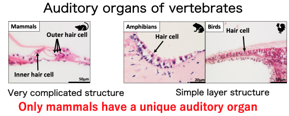
In mammals, auditory organ is composed of two types of hair cells, inner and outer hair cells, and various supporting cells. In contrast to the clear anatomical diversity of hair cells and supporting cells in mammals, the auditory organs of non-mammals show a simple structure in which hair cells and supporting cells are arranged in a row. I’m studying the evolution of the mammalian auditory system from a comparative anatomical perspective. In addition, I’m studying the molecules that are expressed characteristically in various types of supporting cells in order to elucidate the roles of each type of supporting cell in mammals.
- Desired cooperation
-
- In situ hybridization
- Study of the auditory system of vertebrates
-
Faculty of Veterinary Medicine, Department of Veterinary Medicine
- Assistant professor
- Takuya KANDA
- Research Field
Food safety and Food Microbiology, Bacteriology, Animal Health
- Keyword(s)
Mycoplasma bovis, adhesion, Loop-mediated isothermal amplification, HACCP
- Research theme
-
- The factor of Mycoplasma bovis adhesion in infection
- The rapid detection of bacteria
- Assessment of microbial contamination risk in meat products
Outline of research activities
Food hygiene is expected to more important due to HACCP and export of meat and marine product.
Pneumonia is a common disease in feedlot, and Mycoplasma bovis may be involved. The bacteria occur such as pneumonia, mastitis, and arthritis. Endocarditis, which causes lesions in the heart, is occasionally observed at slaughterhouses (Fig). The researches of adhesive factors for vaccine development leads to a stable supply of meat product.
Enterohemorrhagic Escherichia coli (EHEC, STEC), Salmonella, Campylobacter,which are known to be food poisoning, are tested at the Meat Inspection Center. The study of food microbiology that have attracted attention in recent years, such as Clostridium perfringens and Listeria monocytogenes, makes to improve food safety.

- Desired cooperation
-
- Resareches on adhesion of Bacteria to host cell
- The rapid detection of bacteria using LAMP and PCR etc...
-
Faculty of Veterinary Medicine, Department of Veterinary Medicine
- Assistant
- Yukari NAKAMURA
- Research Field
Dermatology, Parasitology, Epidemiology
- Keyword(s)
Dermatosis, Parasite, Preventive Veterinary Medicine
- Research theme
-
- Research on dermatosis and ear diseases in animals
- Treatment of parasite infections in animals
- Epidemiological research on preventive veterinary medicine
Outline of research activities
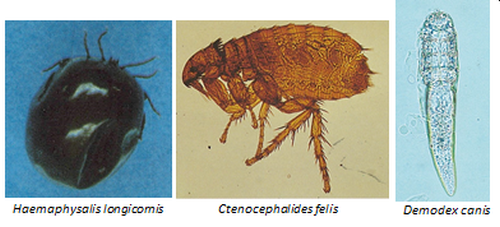
I am working for research on the causes, diagnosis and treatment of dermatosis and ear diseases in companion animals (dogs, cats and exotic pet animals). Furthermore, I am focusing on research on the treatment of infestation by fleas, ticks and Demodex mites. With regard to preventive veterinary medicine, the survey on the prevalence of infectious diseases in dogs and cats and further pharmacoepidemiological studies on vaccines, prophylactics for dirofilariasis, and ectoparasiticides for dogs and cats.
- Desired cooperation
-
- Research on drugs for cutaneous application for companion animals
- Research on parasite infections in animals
- Research on veterinary medical products
-
Faculty of Veterinary Medicine, Department of Veterinary Medicine
- Assistant
- Yuko MIZUTANI
- Research Field
Veterinary Radiology, Veterinary Diagnostic Imaging, Veterinary Neurology
- Keyword(s)
Radiation Therapy, MRI, Diffusion Tensor Imaging (DTI)
- Research theme
-
- Precision Enhancement and Indication Expansion in Veterinary Radiation Therapy
- Clinical Application of DTI in Veterinary Medicine
- Imaging-Based Evaluation and Prediction of Radiation Effects
Outline of research activities
In recent years, advances in high-precision radiotherapy and image-guided technologies have improved the balance between tumor control and normal tissue preservation in veterinary medicine. However, compared with human medicine, the number of clinical cases remains limited due to constraints such as general anesthesia and cost. In addition, differences in long-term follow-up further constrain data availability. Consequently, evidence regarding the evaluation and prediction of radiation effects, particularly late adverse effects, remains insufficient.
In human medicine, image analysis with magnetic resonance imaging (MRI), radiomics, and genomic information is used to assess therapeutic efficacy and the risk of radiation effects, and to inform treatment planning, thereby contributing to the ongoing development of personalized radiation therapy. In contrast, veterinary medicine still relies primarily on evaluations based on radiation dose and clinical outcomes, and quantitative imaging-based assessments as well as integrative multi-factor analyses remain underdeveloped.
Against this background, we have conducted research on diffusion tensor imaging (DTI) using MRI and are exploring its clinical applications for optimizing treatment planning and evaluating and predicting radiation effects.- Desired cooperation
-
- Research on Veterinary Radiation Therapy
- Research on Image Analysis
-
Faculty of Veterinary Medicine, Department of Veterinary Associated Science
- Professor
- Kayo FURUMOTO
- Research Field
Laboratory Animal Science, Health Science
- Keyword(s)
Animal Welfare, Health Promotion
- Research theme
-
- Animal welfare in laboratory animal science
- Health promotion of owner and dog
Outline of research activities

In order to conduct animal experiments with due consideration for animal welfare, we are improving to improve experimental techniques and management methods for experimental animals, and the breeding environment. Since we humans and animals can only communicate non-verbally, we are interested in assessing the needs of animals. We are studying pain assessment and temperature management in postoperative mice by setting up an environment that is selective for the animals.
We also view dog walking as a “joint activity between owner and dog,” and research the health promotion of dogs and their owners through dog walking. Dog walking have been reported to have a positive effects on the physical and mental health of dogs and their owners. We are currently researching heat stroke prevention for dog owners and dogs during dog walking from the perspective of safe health promotion.- Desired cooperation
-
- Animal Welfare
- Animal Nursing
- Health Promotion
-
Faculty of Veterinary Medicine, Department of Veterinary Associated Science
- Professor
- Nobuyuki KIMURA
- Research Field
Experimental pathology, Cell Biology, Zoobiquity
- Keyword(s)
Aging, Brain, Nonhuman Primate, Membrane Traffic
- Research theme
-
- Pathogenesis of Alzheimer's disease
- Aging science
- Membrane traffic and neuronal activity
- Biological adaptation for climate changes
Outline of research activities
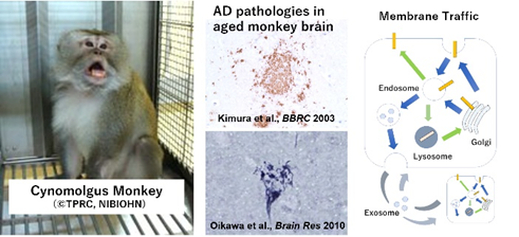
Alzheimer’s disease (AD) is one of the major causative diseases for dementia. Characteristic AD pathology, such as amyloid plaques and neurofibrillary tangles, are observed in aged animal brains, suggesting that AD pathology would be the sign of brain aging. Zoobiquity is an approach to investigate and treat diseases without any distinction of species. I have been working on the studies to clarify the mechanism of brain aging and the pathogenesis of AD by using nonhuman primates. I am also interested in how neuronal activities affect membrane traffic system in neural cells.
- Desired cooperation
-
- Clinical research on age-related diseases.
- Basic research on aging
- Basic research on membrane trafficking
-
Faculty of Veterinary Medicine, Department of Veterinary Associated Science
- Associate professor
- Sachi OKABAYASHI
- Research Field
Primate Medical Science, Veterinary Pathology, Postoperative Care of Animals
- Keyword(s)
Pathological analysis of primates, Chronic pain, Enrichment
- Research theme
-
- Pathological analysis of spontaneous diseases in primates
- Methods for the assessment and treatment of chronic pain and visceral pain
- Environmental enrichment for experimental animals or zoo animals
Outline of research activities
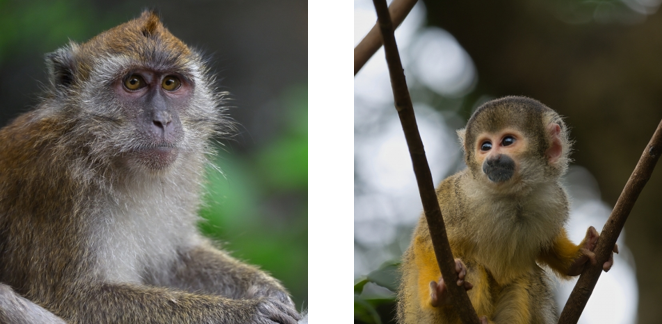
Non-human primates are prone to a variety of naturally occurring diseases, including diabetes, hyperlipidemia, heart disease, endometriosis, gastrointestinal disorders such as gastric dilatation and intractable diarrhea, macular degeneration, cataracts, periodontal disease, growth disorders, and tumors. We are conducting research to clinically and pathologically evaluate these conditions and assess their potential as models for human diseases.
Furthermore, chronic pain, such as neuropathic pain, can persist even after damage to the nervous system has healed, resulting in ongoing pain and discomfort. However, many aspects of its causes remain unclear. We conduct research on the assessment and treatment of chronic pain and visceral pain, with the aim of contributing to pain management in both animals and humans.
When I actually tried using toys to care for experimental animals, the animals often lost interest quickly and stopped playing, broke the toys, or left them in unsanitary conditions, which frequently led me to question their effectiveness. I am eager to actively engage in research on environmental enrichment for animals.
- Desired cooperation
-
- Research on disease models using primates
- Chronic pain and visceral pain
- Environmental enrichment for animals
Search by department
Search by SDGs