-
Faculty of Information Science and Engineering, Department of Information Science and Engineering
- Associate professor
- Wataru KOBAYASHI
- Research Field
Control, Rehabilitation, System Engineering, Fluid mechanics
- Keyword(s)
Fluid Power System, Rehabilitation, Life Support System, Green Drive Source
- Research theme
-
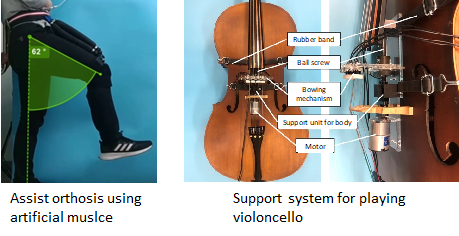
- Control of tap-water drive artificial muscles
- Assist orthosis for under-water gait training
- Pure tap-water drive system for emergency drive source
- Support systems for musical instruments
Outline of research activities


Water hydraulic systems which use tap-water as working fluid are called aqua drive systems and they can realize novel green drive sources with 100% oil-free characteristics. In our laboratory, we study to realize a clean and safe system for rehabilitation, power assist, and life support. In addition, we have developed pure aqua drive systems, which can be driven without any power source, by controlling fluidic flow and have applied such systems to emergency drive sources and disaster prevention systems. We have also developed support systems to play musical instruments by only one hand.
- Desired cooperation
-
- Application of aqua drive systems for rehabilitation and life support systems
- Development of emergency drive source and disaster prevention systems using pure aqua drive systems
- Development of support systems for musical instruments
-
Faculty of Information Science and Engineering, Department of Information Science and Engineering
- Lecturer
- Atsutoshi KURIHARA
- Research Field
Human Interface, Interaction, Optical Engineering
- Keyword(s)
Aerial display, 3-D display, Image processing
- Research theme
-
- Proposal of a new method for displaying aerial images
- Proposal of a new method for 3D display
- Applications of 3D technology and image processing
Outline of research activities
It is widely believed that several physiological factors contribute to how humans perceive the position and shape of objects in three dimensions. 3D and aerial display technologies leverage these factors, enabling viewers to perceive images with a sense of real depth. We continue to explore ways to achieve more natural stereoscopic vision and to make objects appear as though they truly exist in empty space.
Please view the image on the right with your right eye and the image on the left with your left eye, aligning them so that the red objects overlap. You should then perceive a sense of depth, as if the red object is floating in midair with a glass plate beneath it. This effect is known as binocular disparity, one of the key physiological factors involved in depth perception.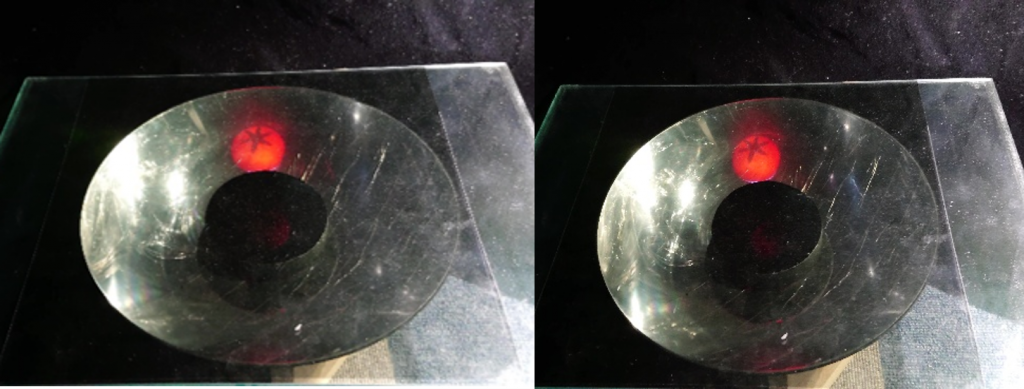
- Desired cooperation
-
- Research on aerial images
- Research on 3D display
- General research on industrial support using image processing
-
Faculty of Information Science and Engineering, Department of Information Science and Engineering
- Lecturer
- Jun TSUZURUGI
- Research Field
Statistical information mechanics.
- Keyword(s)
Image restoration, Statistical mechanics, Neuro science
- Research theme
-
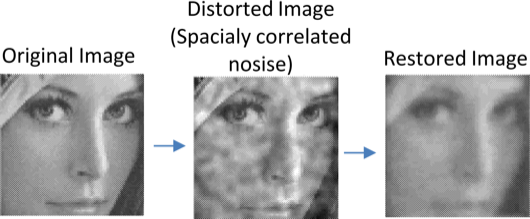
- Statistical Mechanics of the Bayesian Image Restoration under Spatially Correlated Noise.
Outline of research activitiesThe aim of this study is to investigate the use of the Bayesian inference and to restore noise-degraded images under conditions of spatially correlated noise. The generative statistical models used for the original image and the noise were assumed to obey multi-dimensional Gaussian distributions whose covariance matrices are translational invariant. This study derives an exact description to be used as the expectation for the restored image by the Fourier transformation and restored an image distorted by spatially correlated noise by using a spatially uncorrelated noise model.
- Desired cooperation
-
-
Faculty of Information Science and Engineering, Department of Information Science and Engineering
- Lecturer
- Masashi YOKOTA
- Research Field
Robotics, Control engineering, Mechatronics
- Keyword(s)
Mechatronics control device, Power assist device, MPU
- Research theme
-
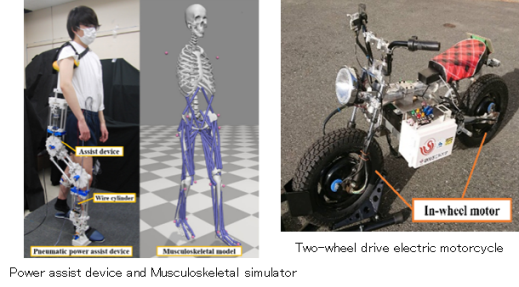
- Development of Non-Wearing Type Power Assist Device
- Development of Control System for Two-Wheel Drive Electric Motorcycle
- Development of Guidance System for Mobile Robots Using Ceiling Cameras
Outline of research activities
In this study, various mechatronics devices and control systems with pneumatic and electric actuators such as non-wearing type power assist devices, electric motorcycles, and mobile robots were developed based on MPU (embedded controller) and RTAI. The tested power assist device was attached a subject and the muscle burden was evaluated by using myoelectric sensors and a musculoskeletal simulator. In addition, in the study of electric motorcycles and mobile robots, these control systems were designed based on the analytical simulation. Through these studies, I’m going to submit papers and give presentations in domestic/international conferences.
- Desired cooperation
-
- Development and evaluation of power assist devices
- Development and evaluation of mechatronics control devices.
- Development and evaluation of control systems, etc.
-
Faculty of Information Science and Engineering, Department of Information Science and Engineering
- Lecturer
- Sachio KANNO
- Research Field
Numerical computation, Symbolic computation
- Keyword(s)
Numerical computation, Symbolic computation, Computer graphics
- Research theme
-
- Software development for hight precision computation
- Application of symbolic computation with LISP
- CG, MIDI
Outline of research activitiesWe develop multi-precision computational routines with automatic result verification.
These routines, tracing error bounds of each steps in computation, finally give an interval in which the exact result exists.
Also, we study on tonal music generating system using MIDI interface as an application of symbolic computation.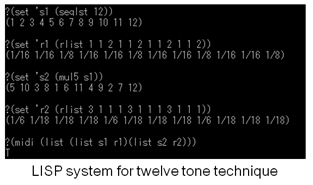
- Desired cooperation
-
-
Faculty of Life Science, Department of Bioscience
- Professor
- Da-Hong WANG
- Research Field
Environmental Public Health, Environmental Biochemistry
- Keyword(s)
Environment, Assessment of Exposure Effects, Functional Foods, Disease Prevention, Biomarkers
- Research theme
-
- Assessment of exposure effects of environmental substances
- Development of Functional foods
- Examining the psychological and physiological effects of the forest environment on humans
Outline of research activities

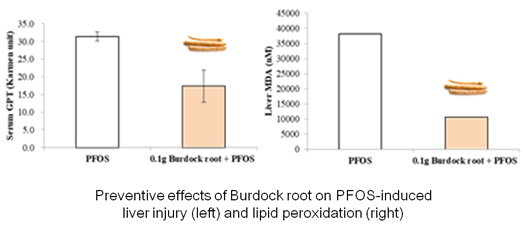
We are developing the simple and effective methods for screening oxidative stress-induced environmental substances, and the functional foods to control the toxicity of environmental substances. Furthermore, in order to understand the psychological and physiological effects of the forest environment on humans, we are conducting comparative studies using biological oxidative and antioxidant biomarkers as indicators.
- Desired cooperation
-
- Health assessment of functional foods
-
Faculty of Life Science, Department of Bioscience
- Professor
- Hideya ANDO
- Research Field
Behavioral Ecology and Conservation Science
- Keyword(s)
Melanin, Ultraviolet light, Skin whitening cosmetics
- Research theme
-
- Analysis of the mechanism of melanin movement within the skin.
- Evaluation of the inhibitory effect of melanin synthesis using cultured human skin cells.
- Study on the ultraviolet light-induced skin damage.
Outline of research activities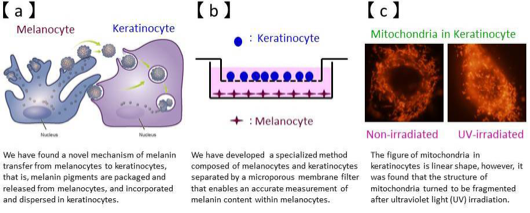
- Desired cooperation
-
- Screening of a skin lightening agent based on a novel mechanism.
- Research for an activator of mitochondria and for an anti-aging agent.
-
Faculty of Life Science, Department of Bioscience
- Professor
- Jun NAOHARA
- Research Field
Environmental analytical chemistry, Water processing technology, Ultimate analysis
- Keyword(s)
Advanced Oxidation Process, Toxic element, Ultraviolet rays processing, ICP-MS
- Research theme
-
- Decomposition of environmental polluted material by AOP method.
- Ultimate analysis of the biospecimen and environmental sample by ICP-MS.
- Water processing technology development with the excimer lamp.
Outline of research activities

· We establish a water processing technology with the excimer lamp which does not include mercury. We perform the characteristic evaluation of the new source of light and consider whether we are established as a substitute new technology.
· The element concentration of human hair living in the same area and element concentration in water to drink are measured by ICP-MS. We examine relationship between toxic element concentration in hair and water element concentration.
· The production distinction of the farm products by stable isotope ratio analysis and the trace element analysis and marine products is studied.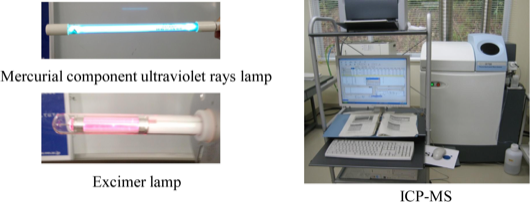
- Desired cooperation
-
- Technology development of the treatment of environmental pollution material.
- Ultimate analysis of the environmental sample and biospecimen.
-
Faculty of Life Science, Department of Bioscience
- Professor
- Keita KANKI
- Research Field
Regenerative Medicine, Tumor Biology
- Keyword(s)
Regenerative Medicine, iPS cells, Liver, Cancer
- Research theme
-
- Induction of functional hepatocyte from pluripotent stem cells. Regulation of cell differentiation mechanism in cancer cells.
Outline of research activitiesDevelopment of efficient protocol to induce functional cells from pluripotent stem cells is important for cell therapies. We aim to create highly differentiated somatic cells and functional tissues by using genetic manipulation, 3D-culture, and co-culture methods. We also investigate the regulation mechanism of differentiation in cancer cells which could be useful information for both cancer therapy and regenerative medicine.
- Desired cooperation
-
- Artificial organ
- Bioreactor
- Cell source for regenerative medicine
- Cancer therapy
-
Faculty of Life Science, Department of Bioscience
- Professor
- Ken-ichiro HAYASHI
- Research Field
Agrochemistry, Plant Science, Chemical Biology
- Keyword(s)
Plant hormone, auxin, Plant growth regulator
- Research theme
-
- Metabolic pathway of plant hormone auxin.
- Design and synthesis of auxin derivatives
- Development of plant growth regulator
Outline of research activities

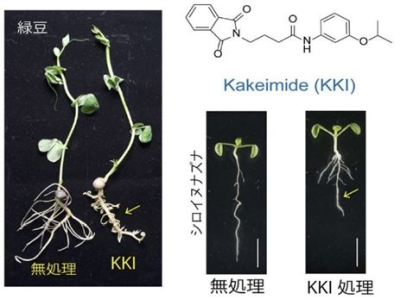
We have been working on the mechanism of inactivation of the plant hormone auxin. In one of our research projects, we have discovered potent plant growth regulator, designated as KAKEIMIDE, which is a potent inhibitor of the GH3 enzyme that inactivate auxin. Auxin degradation inhibitor in plants can regulate auxin levels in various plant species, including crops, and thus promote rooting of cuttings and fruit set and enlargement of fruits.
- Desired cooperation
-
- Synthesis and evaluation of plant growth regulator
-
Faculty of Life Science, Department of Bioscience
- Professor
- Koji MATSUURA
- Research Field
Physiology, Microfluidics,Assisted Reproductive Technology (ART)
- Keyword(s)
Sperm selection, Early embryo cluture, Mechanobiology
- Research theme
-
- Paper-based devices for sperm motility analysis (See below)
- Development of dynamic embryo culture systems
- Energy metabolism in mammalian sperms
- Microfluidic cell separation
Outline of research activities
We have demonstrated an inexpensive and easy-to-handle device for monitoring mammalian sperm motility made by patterning a piece of paper and measuring the activity of a specific enzyme. After applying semen to the hydrophilic center circle of the patterned paper, a tetrazolium-based colorimetric assay data can be used to help estimate the percentage of motile human sperm (sperm motility) in semen based on the character that motile human sperm moved in and on the paper.
(Matsuura et al. 2014, 2017, 2019)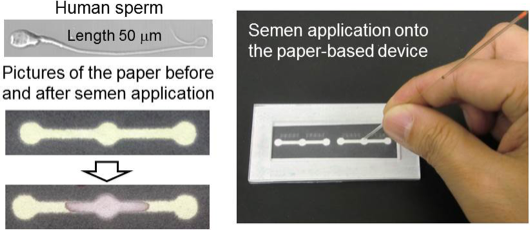
- Desired cooperation
-
- Clinical application of developed microfluidic devices for ART Mulicenter clinical studies
- Microfluidic device application for cell handling
-
Faculty of Life Science, Department of Bioscience
- Professor
- Masayuki HARAMURA
- Research Field
Mdicinal & Bioorganic Chemistry, Chemical Biology
- Keyword(s)
Peptide Chemistry, Chemical Proteomics
- Research theme
-
- Design and synthesis of bioactive organic molecules.
- Development of a method for analyzing intermolecular interaction between proteins and bioactive small molecules.
Outline of research activities
・Peptide-based drug design and synthesis:
Design and synthesis of bioactive small molecules from peptide hormons and proteins based on structure activity relationships.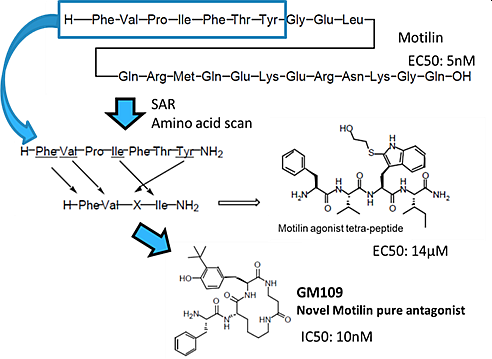
・Chemical Biology Research:
Development of a method for discovery of novel drug target protein using small bioactive compounds as the probes.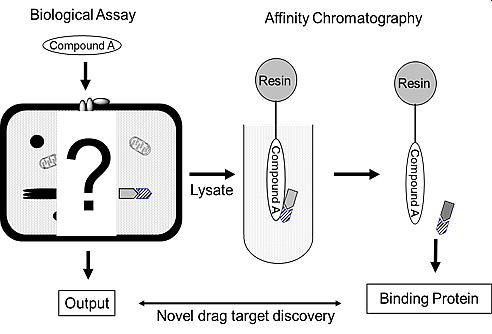
- Desired cooperation
-
- Peptide based drug design and symthesis
- Discovery of novel drug target protein of small bioactive compounds
-
Faculty of Life Science, Department of Bioscience
- Professor
- Motonao NAKAMURA
- Research Field
Cellular signaling, G protein coupled receptor (GPCR)
- Keyword(s)
receptor, GPCR, signal transduction, molecular biology
- Research theme
-
- Functional studies on the desease-related GPCRs
- Development of novel ligands for target GPCRs
- Fundamental study on the GPCR biology
Outline of research activities
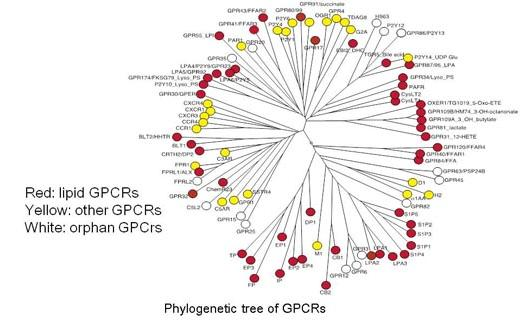
G protein-coupled receptors (GPCRs) utilize complex cellular systems to respond to diverse ligand concentration. Our recent work elucidated that this system functions through the phosphorylation status. Thus, we have been studing on the potential roles of this modification for the GPCR signaling. In addition, we are developping the novel ligands for desease-reated GPCRs to regulate. We hope that our studies provide an expanding conceptual view of the drug development for the regulation of GPCRs.
- Desired cooperation
-
- Screening and development of bioactive ligands for GPCRs
-
Faculty of Life Science, Department of Bioscience
- Professor
- Nobuyasu MATSUURA
- Research Field
Bioorganic chemistry
- Keyword(s)
Natural products, Lifestyle disease
- Research theme
-
- Development of remedy of lifestyle diseases from natural products
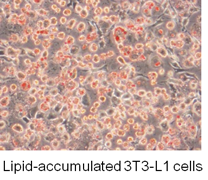
Outline of research activitiesIt is reported that a lot of natural products have unknown various function for remedy of life style diseases. For the purpose of the development of remedy for lifestyle diseases from natural resource products, the study of isolation and structural determination of active compound from plant extract have studied.
- Desired cooperation
-
- Validation for experimental animal model
-
Faculty of Life Science, Department of Bioscience
- Professor
- Ryoji MITSUI
- Research Field
Applied Microbiology, Food Microbiology, Applied Enzymology, Microbial Ecology
- Keyword(s)
Symbiotic microorganisms, Enterobacterial metabolites, Fermented foods, Functional food materials
- Research theme
-
- Analysis of the plant growth-promoting effects of bacteria symbiotically associated with plant Leaves.
- Metabolism of food components by enterobacteria and its applications
- Research to extend the shelf life of food by controlling microbial growth
- Development of industrially applicable microorganisms and microbial enzymes for the production of fine chemicals
Outline of research activities
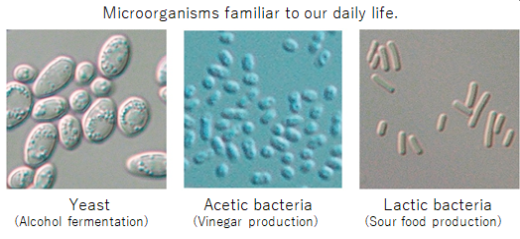
In our laboratory, we explore the untapped potential of microorganisms that play important roles in agriculture, food processing, and human health, both inside and outside our bodies. Our goal is to discover useful microorganisms with novel abilities and develop technologies to enrich our lives sustainably.
- Desired cooperation
-
- Screening of useful microorganisms and their utilization.
-
Faculty of Life Science, Department of Bioscience
- Professor
- Takeru NAIKI
- Research Field
Biomedical Engineering, Biomechanics, Regenerative Medical Engineering
- Keyword(s)
Tissue Engineering, Muscle Hypertrophy, Blood Flow, Mechanical analysis, Ozone Water
- Research theme
-
- Developmet the cultured thick and huge tissue
- Mechanisms of muscle hypertrophy with Kaatsu traning
- Development of high-performance technologies for hemodialysis
- Prolongation of antiseptic property of Ozone by freezing
Outline of research activities
The aim of the one of my research is to develop the cultured thick and huge musclular tissue. To do this, I am developing the blood vescle in cultured tissues by using selfaggregation technique.
I am studying the mechanisms of muscular hypertrophy by Kaatsu training (pressurized muscle training) in cellular level to develop the method to treat musclular atrophy etc. Also I am studying the effects of physical environments (temperature, air contact, and ultrasonic wave irratiation, etc.) around blood in extracorporeal circulation devices such as artificial carcdiopulmonary device or dialysis cdevice on blood coagulation to develop the high-performance extracorporeal blood circulation device.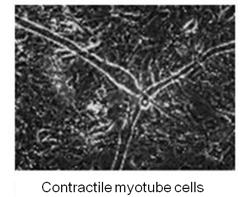
- Desired cooperation
-
- Development of regenerative medical engineering techniques
- Development of bioengineering equipments including medical devices
- Elusidation of mechanisms of occurrence of circulatory or musculoskeletal disorder and development of method of treatment
-
Faculty of Life Science, Department of Bioscience
- Professor
- Yoshiko MINAMI
- Research Field
Molecular biology, Biochemistry
- Keyword(s)
Protein, Cell, Metabolic pathway
- Research theme
-
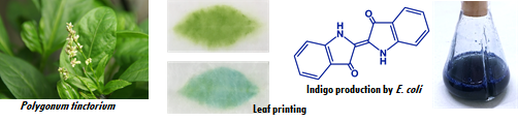
- Analysis of the indican metabolic pathway from an indigo plant, Polygonum tinctorium.
- Analysis of unique proteins from a true slime mold, Physarum polycephalum.
- Analysis of secretory pectolyase from the fungi, Aspergillus japonicus.
Outline of research activities
I study the biosynthetic pathway of indican (a precursor of indigo). As an application, I attempt the mass production of indigo in E. coli.
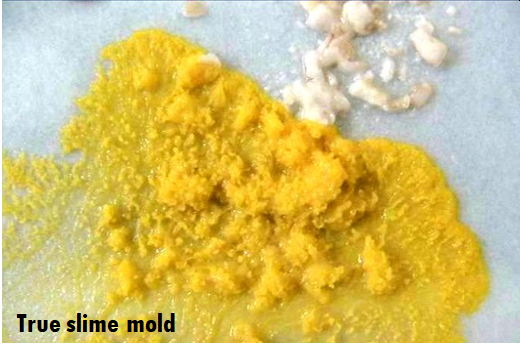 I analyze the intracellular function of several unique proteins from a slime mold.
- Desired cooperation
-
- Production and utilization of indigo dye.
- Research on the character of true slime mold.
-
Faculty of Life Science, Department of Bioscience
- Associate professor
- Atsuhito KUBOKI
- Research Field
Synthetic organic Chemistry, Bioorganic chemistry
- Keyword(s)
Organic reaction, Enzymatic reaction, Bioactive compound
- Research theme
-
- Development of Development of new synthetic methodologies of ο-quinones
- Studies on chemo-enzymatic processes for fine chemicals
Outline of research activities
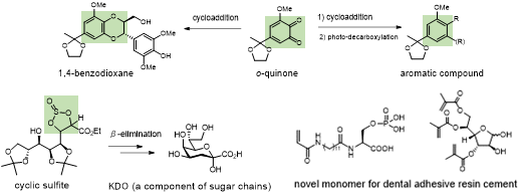
Our group is interested in developing new synthetic methodologies to enable synthesis of biologically active natural compounds and their derivatives in environmental friendly manner. As such manners, we have developed metal-free regioselective cycloaddition of highly reactive o-quinone to form 1,4-benzodioxane and a procedure for construction of benzene ring from o-quinone and terminal alkynes through cycloaddition and photo-decarboxylation. We have also reported concise synthetic route to KDO, a kind of carbohydrate, including elimination of cyclic sulfite as a key step. By collaborative research with a company, functional monomers for dental adhesive resin cements have been developed.
- Desired cooperation
-
- Development of fine chemicals by analogue synthesis
- Partial modification of lead compound
-
Faculty of Life Science, Department of Bioscience
- Associate professor
- Midori FUTAMI
- Research Field
Protein engineering
- Keyword(s)
Protein chemistry, Funactional regulation of mammalian cells, Blood purification
- Research theme
-
- Artificial regulation of mammalian cells by protein transduction technology.
- Development of plasma adsorption column using protein ligand.
Outline of research activities
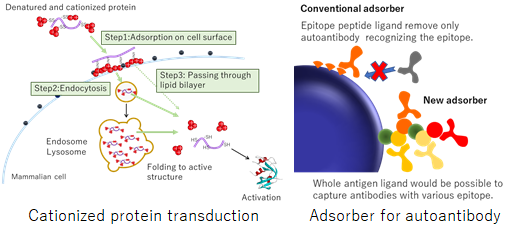
Denatired protein forms insoluble aggrigate. Chemical cationization of decatured protein s them water soluble. Based on this protein cationization method, we have studied two theme as described later. Left panel shows the outline of cationized protein transduction for living mammalian cells。Cationized protein efficiently adosorbed to negatively charged cell surface and uptaked by endocytosis. Right panel shows application of cationized protein for adosorbent of autoantibody. Denatured and cationized whole antigen immobilized on adsorber would be possible to capture antibodies with various epitope.
- Desired cooperation
-
- Production of recombinant protein by the host of E.coli or mammalian cell.
- Protein analysis.
- Mammalian cell regulation.
- Development of plasma adsorption column using protein ligand.
-
Faculty of Life Science, Department of Bioscience
- Associate professor
- Ryosuke TADOKORO
- Research Field
Cell biology, Developmental biology, Cosmetology
- Keyword(s)
Melanin, Organelle, Intercellular transport, Skin
- Research theme
-
- Molecular and cellular mechanisms underlying melanosome transfer during skin pigmentation
- Skin biology
- Cosmetics
Outline of research activitiesAnimals including humans have beautiful pigments on the body surface. In the pigmentations, melanosomes, specialized organelles for melanin generation, are synthesized in pigment cells called melanocytes and subsequently transferred from melanocytes to surrounding skin and hair keratinocytes. Although to understand melanosome transfer is important for developing cosmetics and pigment biology, molecular and cellular mechanisms of melanosome transfer have long been unclear.
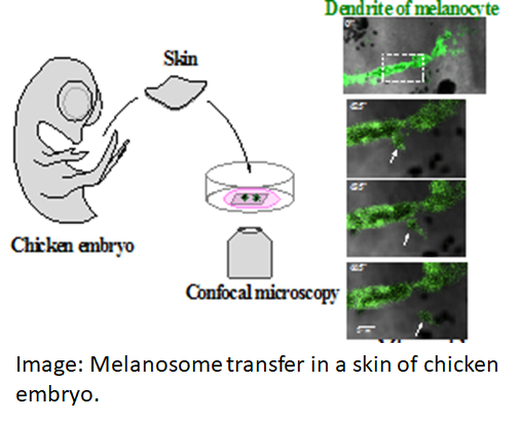 I recently established a novel live imaging technique that enabled to directly analyze melanosome transfer in skin tissue using chicken embryos.I am going to elucidate the whole picture of the intercellular transfer of melanosomes by using the new technique.
- Desired cooperation
-
- Cosmetology
- Skin biology
- Developmental biology, Regeneration engineering、Computer simulation
Search by department
Search by SDGs